
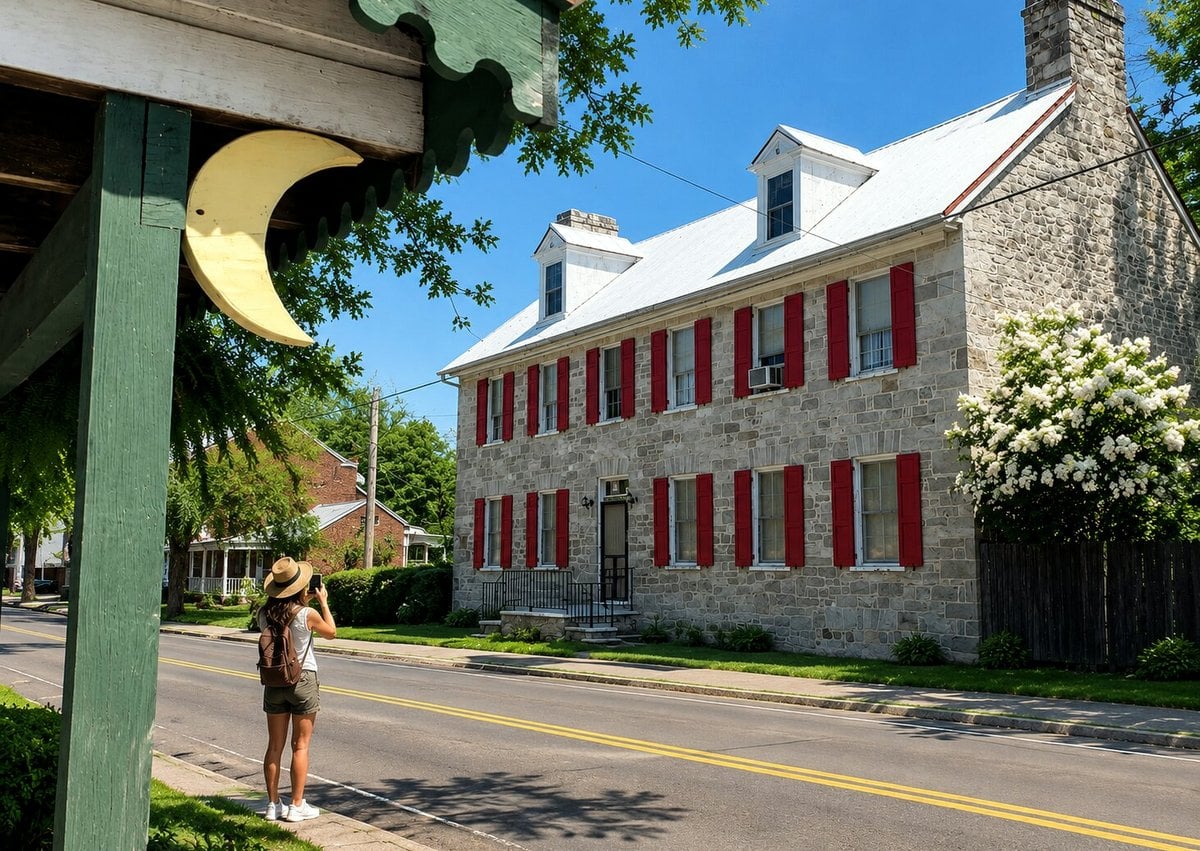
MIDDLEWAY, W.Va. — One of the nation’s leading historic preservation organizations has joined the legal battle over a proposed industrial water-extraction and bottling facility near one of West Virginia’s oldest villages, arguing that the project would irreparably damage a nationally recognized historic district and could weaken preservation protections statewide.

The National Trust for Historic Preservation has joined the Preservation Alliance of West Virginia in filing a friend-of-the-court brief supporting the Jefferson County Planning Commission, which denied Sidewinder Enterprises‘ proposed development.
The case centers on Sidewinder’s proposal to build a one-million-square-foot water-extraction, processing, and bottling complex adjacent to the Middleway Historic District, a community listed on the National Register of Historic Places.
A ruling by the Supreme Court of Appeals of West Virginia is expected later this year and could determine not only the project’s future but also how much authority local governments retain to protect historic places through land-use planning.
A village unlike any other in West Virginia
For many travelers passing through the Eastern Panhandle, Middleway appears little changed since the early days of the American Republic.
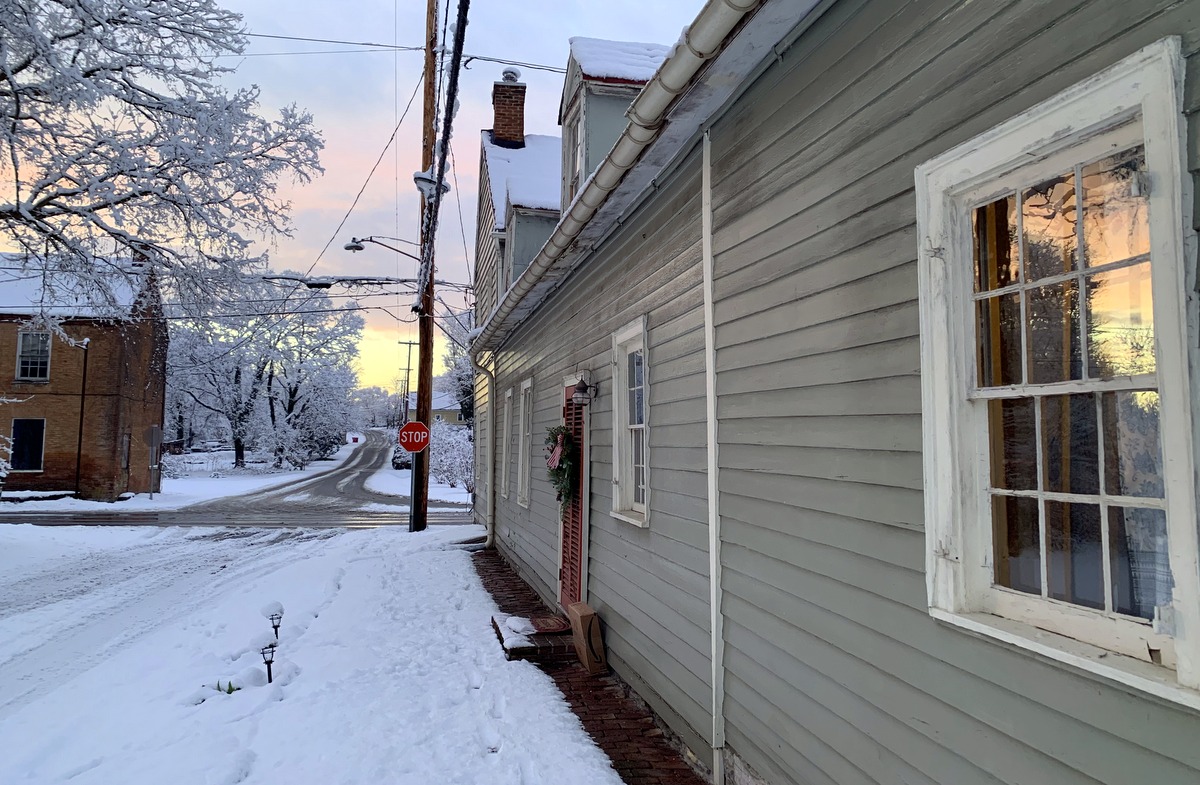
Founded in the 18th century between what are now Charles Town and Martinsburg, the unincorporated village contains roughly 60 historic structures dating from the 1700s and 1800s. Many were built of hand-hewn logs on stacked-stone foundations, while others reflect the simple vernacular architecture that once characterized much of the Appalachian frontier.
The district also includes a Civil War hospital, a battlefield, and both marked and unmarked Civil War graves, preserving layers of history spanning more than two centuries.
When the district was added to the National Register of Historic Places in 1980, federal preservation officials described Middleway as unlike other historic communities in Jefferson County or much of the surrounding region. Rather than being defined by a single landmark, the village’s significance lies in the remarkable survival of its streetscape, building materials, and historic setting.

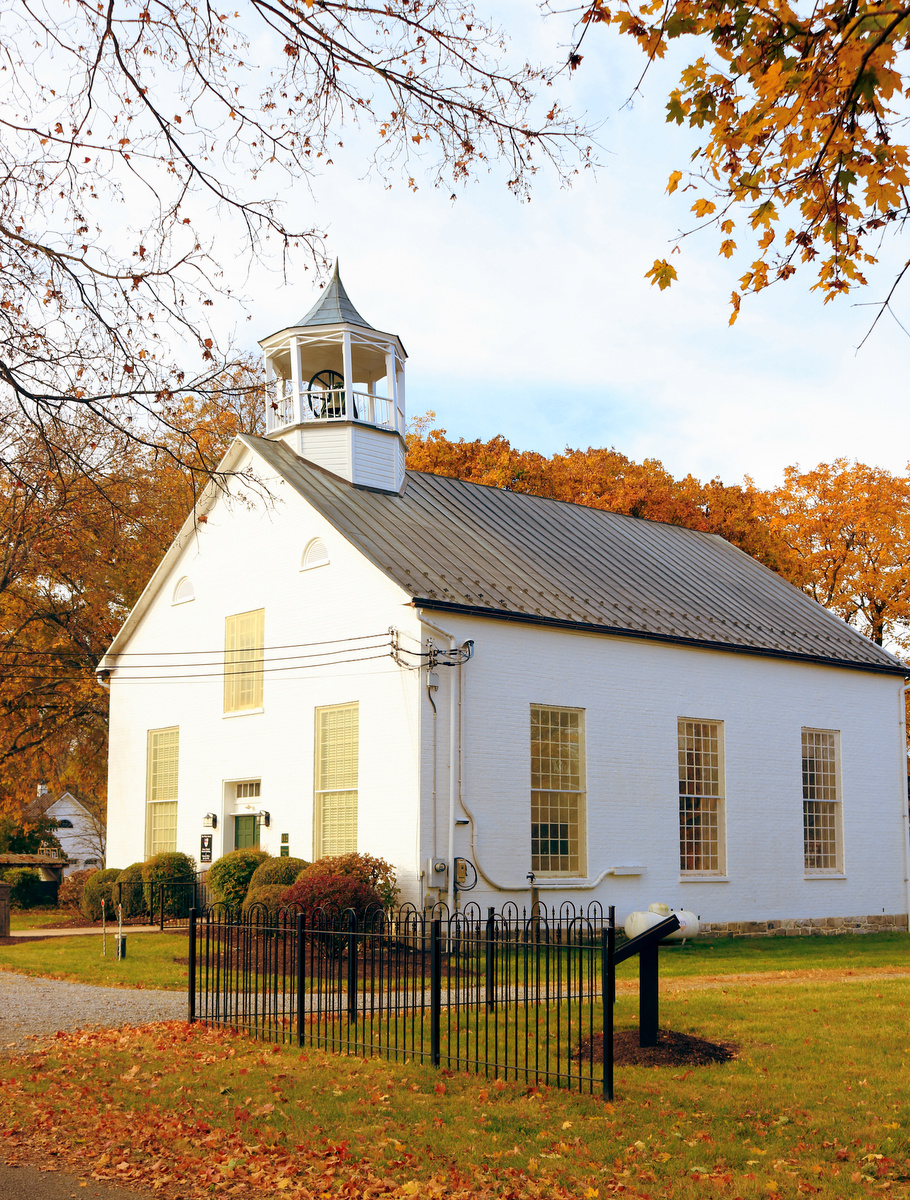
Much of that character remains today, with historic homes, churches, and properties owned by nonprofits carefully maintained by residents and local preservation organizations.
Why planners rejected the proposal
The Jefferson County Planning Commission denied Sidewinder’s concept plan in March 2025, after months of public opposition.
Commission members found that the proposed industrial complex would conflict with county zoning regulations prohibiting development that destroys the historic character of properties listed on the National Register of Historic Places. The decision was later upheld by the Jefferson County Circuit Court.
According to the preservation groups’ filing, the project would introduce industrial infrastructure into an area valued for its historic landscape and quiet rural setting.
The brief argues that constructing a major water pipeline could threaten historic structures and that heavy tractor-trailer traffic serving the bottling facility would cause foreseeable and irreparable harm to the integrity of the historic district.
Preservation groups warn of broader consequences
Although the dispute centers on a single proposed development, preservation advocates say the legal questions extend far beyond Jefferson County.
The National Trust and the Preservation Alliance argue that if Sidewinder prevails, planning commissions across West Virginia could lose much of their ability to deny projects that threaten historic resources, even when evidence shows those developments would permanently alter protected districts.
In their joint filing, the organizations argue that local governments must retain the authority to make reasonable land-use decisions that balance economic development with the preservation of irreplaceable historic resources.
Christopher Cody, an attorney representing the National Trust, said the appeal challenges long-established principles governing local land-use planning and historic preservation.
“The disastrous ramifications of these specious arguments are one of the key motivations for our organization’s participation in this case,” Cody said.
The National Trust noted that this is only its third legal action in West Virginia and its first before the state’s highest court.
For the Preservation Alliance of West Virginia, the filing also marks a milestone. The organization said it is the first friend-of-the-court brief it has submitted because of what it views as the case’s statewide implications.
Decision expected later this year
Sidewinder Enterprises filed its final response with the Supreme Court of Appeals in June.
The court is expected to issue its decision later this year, determining whether Jefferson County lawfully rejected the proposal and potentially setting an important precedent for how West Virginia communities protect historic districts from large-scale development.
Regardless of the outcome, preservationists say the case has become one of the most significant tests of local historic preservation authority in West Virginia in recent years, with implications that extend well beyond the quiet streets of Middleway.
Hopefully the Supreme Court sees it our way an is not influenced by big money .
I’m sick and tired of development destroying our communities
They need to fight this tooth and nail
I sure hope the fight ends in favor of keeping them away of middleway
In destroying that quaint, little town!!
Please consider supporting our fight and donating to the Jefferson County Foundation, West Virginia. The Foundation has been a key player in this campaign along with the concerned citizens of this most historical village.