
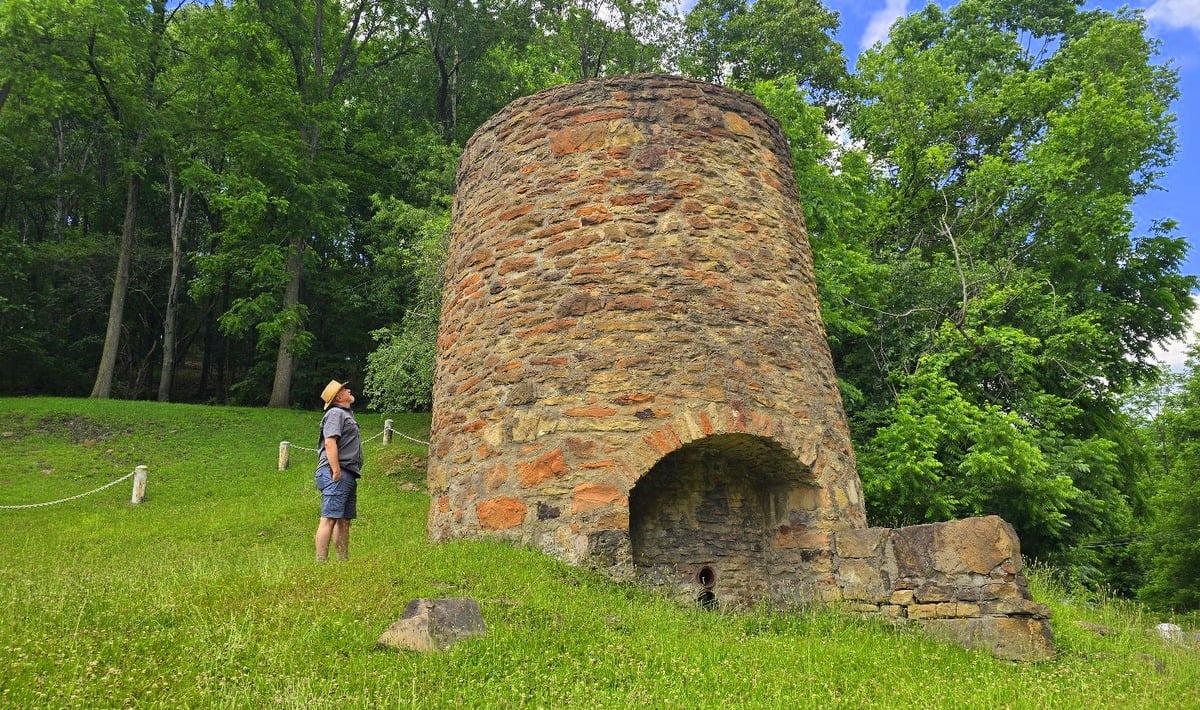
WEIRTON, W.Va. — At the edge of a quiet suburban neighborhood in Hancock County stands what appears at first glance to be a weathered stone tower. It isn’t a tower, however, but the remains of an iron furnace. Marked only by a modest historical sign, the Peter Tarr Furnace played a surprising role in shaping the early American frontier.
Though modest in appearance, the Peter Tarr Furnace, as it’s come to be known, marks the beginning of an industry that transformed what is now West Virginia from a sparsely settled wilderness into one of the nation’s earliest manufacturing regions.
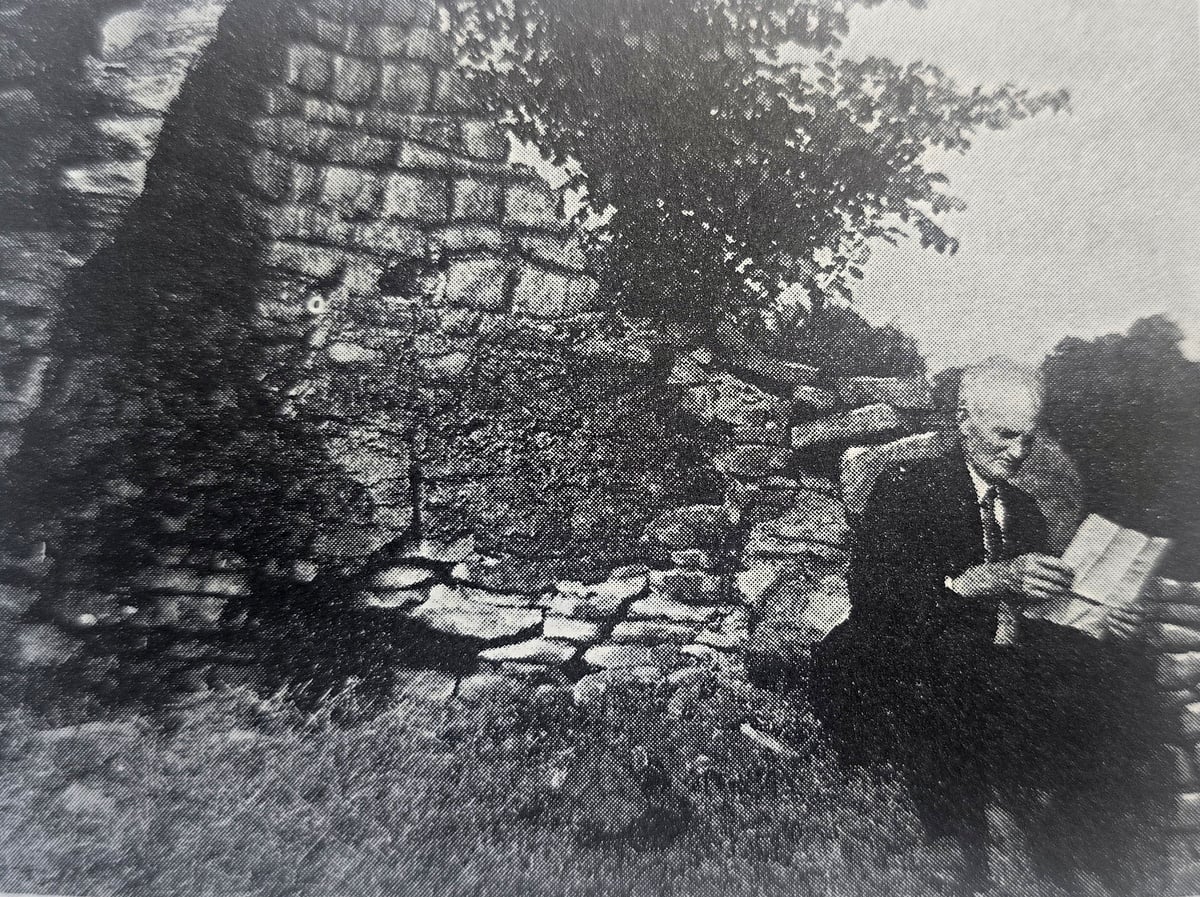
Long before coal made West Virginia famous, iron was among its first great industries. Here, more than two centuries ago, charcoal, limestone, iron ore, and human ingenuity came together to produce the tools, cookware, and hardware that pioneers depended upon as they settled the Ohio Valley.
Today, the Peter Tarr Furnace is one of the state’s oldest surviving industrial landmarks and a reminder that West Virginia’s industrial story began long before steel mills lined the banks of the Ohio River.
Iron built the frontier
To early settlers, iron was almost as essential as food. Axes cleared forests, plows broke new ground, nails held cabins together, and kettles cooked family meals. Before local furnaces were built, these heavy goods had to be hauled across the Allegheny Mountains at tremendous expense.
Western Virginia possessed nearly everything needed to make iron: abundant hardwood forests that could be turned into charcoal, deposits of iron ore and limestone, and swift streams to power furnace bellows. These natural resources led to the construction of some of the region’s earliest ironworks.
Ironmaking began in present-day West Virginia with small bloomeries in the eighteenth century, but the industry expanded dramatically as larger blast furnaces appeared.
A furnace beyond the Alleghenies
The Peter Tarr Furnace was built in the 1790s along Kings Creek, near the Ohio River. According to the National Register of Historic Places nomination, the furnace may have originated under an earlier owner, Grant, before Peter Tarr and his partners acquired and expanded the operation around 1801. It became widely recognized as the first successful iron furnace west of the Allegheny Mountains.
Capable of producing nearly two tons of iron each day, the furnace manufactured everyday items such as skillets, kettles, cooking pots, and fireplace grates. These products supplied frontier communities throughout the growing Ohio Valley and helped establish commerce in what was then the western edge of Virginia.
According to long-standing tradition, the furnace also produced small cannonballs during the War of 1812, some of which were believed to have been supplied to Commodore Oliver Hazard Perry’s fleet before its victory at the Battle of Lake Erie. The story has appeared in West Virginia histories for generations and is included in the site’s National Register nomination, though historians continue to debate the surviving documentary evidence.
How the furnace worked
Visitors often wonder how such a compact stone structure could produce iron.
Workers carried charcoal, iron ore, and limestone to the top of the furnace and layered the materials inside. Bellows forced air into the fire, raising temperatures high enough to separate molten iron from the ore. The glowing metal flowed from an opening near the base of the furnace, where it could be cast into molds or poured into “pig iron” for shipment to other ironworks.
The surrounding hills supplied charcoal, nearby deposits provided ore and limestone, and Kings Creek furnished the water needed to power the operation. Everything required for ironmaking was close at hand.
A window into West Virginia’s industrial beginnings
The Peter Tarr Furnace helped launch an industry that spread across much of present-day West Virginia in the early nineteenth century. Charcoal furnaces later operated in the Eastern Panhandle, along the Cheat River, near Morgantown, and elsewhere, until larger ironworks and, eventually, steel mills transformed Wheeling and Weirton into nationally known manufacturing centers.
By the Civil War, dozens of charcoal furnaces were operating across the state. Though many eventually disappeared as steel replaced charcoal, iron, and richer ore deposits were discovered elsewhere, the industry they created laid the foundation for West Virginia’s later prominence in iron and steel production.

Visiting today
The furnace ceased operation long ago and eventually fell into ruin. In 1968, a reconstruction was built over the original site after archaeologists confirmed that the furnace’s foundation and its underground “salamander” remained largely intact beneath the collapsed stonework. Much of the stone used in the reconstruction came from the original furnace itself, helping preserve one of West Virginia’s most significant industrial landmarks.
The Peter Tarr Furnace also offers a glimpse into the origins of an industry that would eventually define the Upper Ohio Valley. By the late 19th century, charcoal furnaces like Tarr’s had given way to larger coke-fired furnaces and modern steel mills capable of producing iron and steel on an industrial scale.
According to Sarah Cale Doughty, marketing and visitor experience manager for the Top-of-West Virginia Convention and Visitors Bureau, the furnace’s greatest appeal may be that visitors seldom expect to find such an important landmark where it stands today.
“One of the things that makes the Peter Tarr Furnace so special is that it’s completely unexpected,” Doughty said. “With it being tucked within a quiet neighborhood in Kings Creek, it’s easy to drive by without realizing you’re standing beside one of the birthplaces of industry in the Upper Ohio Valley. Visiting the site reminds us that some of our most important history isn’t behind museum walls but is woven into the communities we call home.
“That unexpected setting makes visiting the Peter Tarr Furnace feel less like checking off a tourist stop and more like uncovering a hidden chapter of American history.”
Just a few miles south, Weirton Steel grew into one of the nation’s largest integrated steel producers, employing tens of thousands of workers at its peak and helping shape the economy, culture, and skyline of the northern panhandle for much of the 20th century. Together, the two sites illustrate the remarkable evolution of ironmaking in the valley—from a hand-built frontier furnace to one of America’s great steel-producing centers.
Standing beside the Peter Tarr Furnace today, it takes little imagination to picture the glow of charcoal fires, the ring of hammers, and wagons carrying freshly cast iron toward the Ohio River. Few places in West Virginia offer such a tangible connection to the state’s earliest industrial heritage.
Long before coal seams were mined or steel mills dominated the Ohio Valley, this quiet corner of Hancock County helped forge the tools that built the American frontier.
For more information on visiting the furnace and nearby historical attractions, contact the Top of West Virginia Convention and Visitors Bureau.
Thanks for this information.