
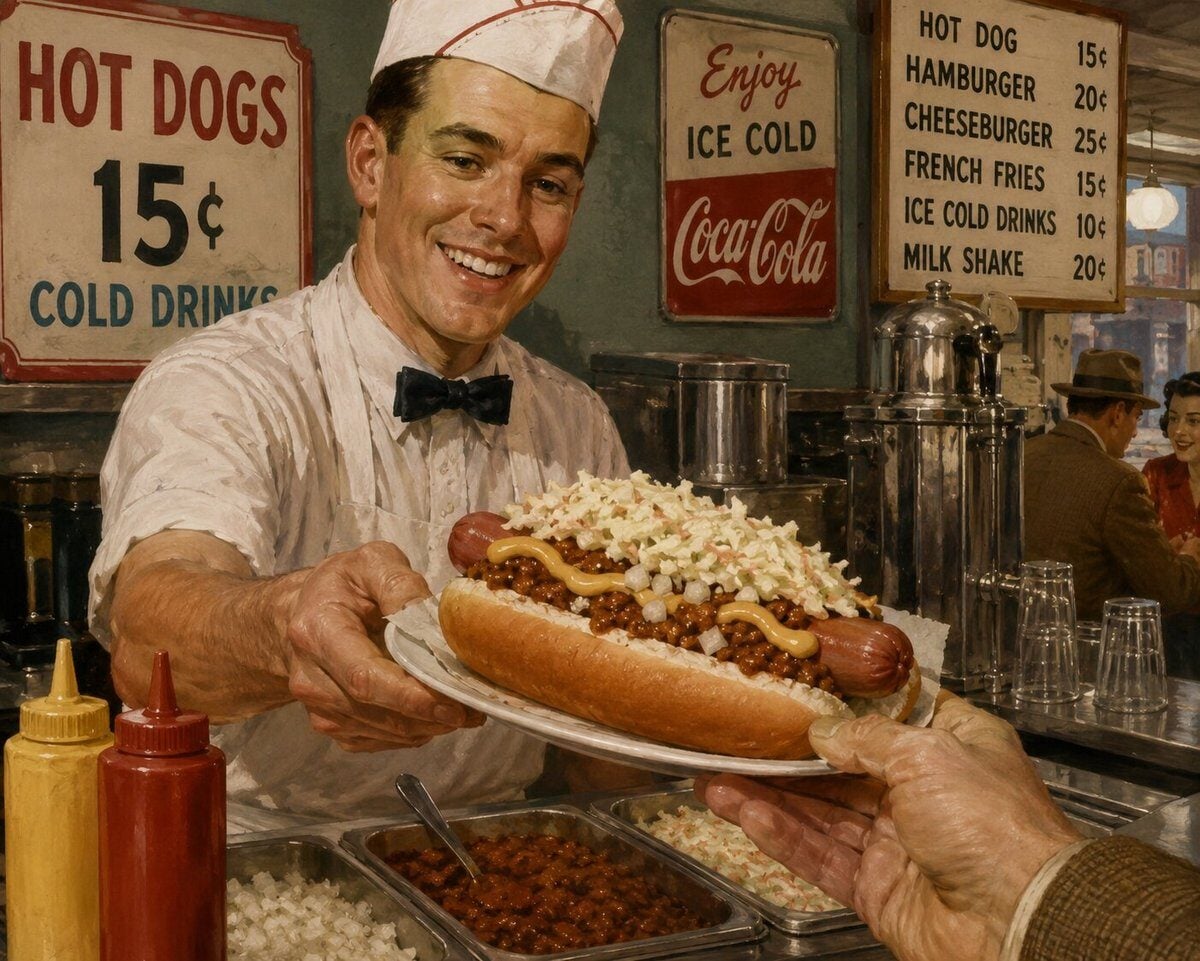
CHARLESTON, W.Va. — In most parts of the United States, a hot dog is a simple meal topped with a handful of condiments. In West Virginia, it is one of the state’s most recognizable foods and a source of regional pride.

The traditional West Virginia hot dog follows a formula familiar across much of the Mountain State—mustard, chili, onions, and coleslaw. The combination appears on menus from small-town drive-ins and roadside stands to county fairs, diners, and ballparks, where generations of residents have grown up ordering hot dogs “with everything.”
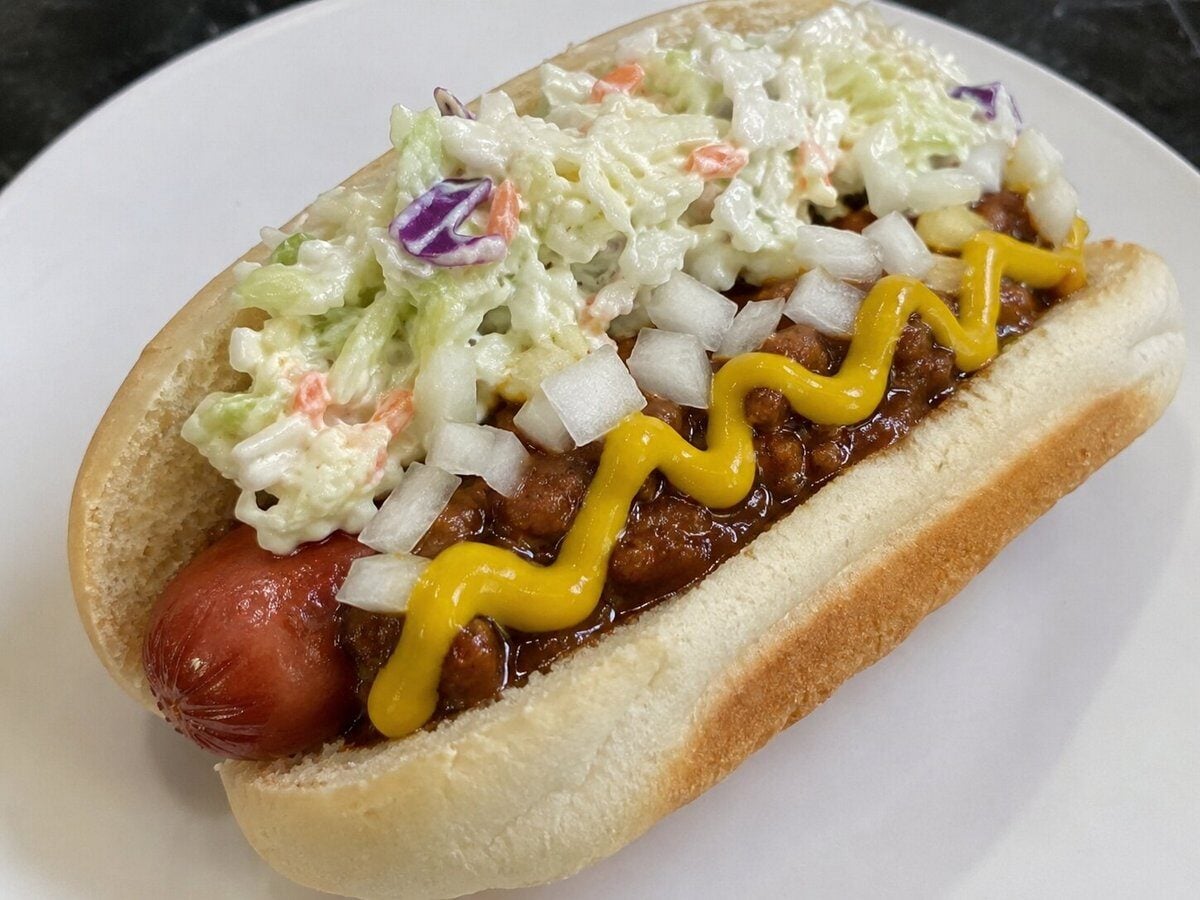
While regional variations exist, the chili-slaw dog has become as closely associated with West Virginia as ramps and pepperoni rolls. For many residents, it is more than a popular meal. It is a food tradition tied to family, community, and local identity.
Read more: Why ramps remain West Virginia’s most famous wild food.
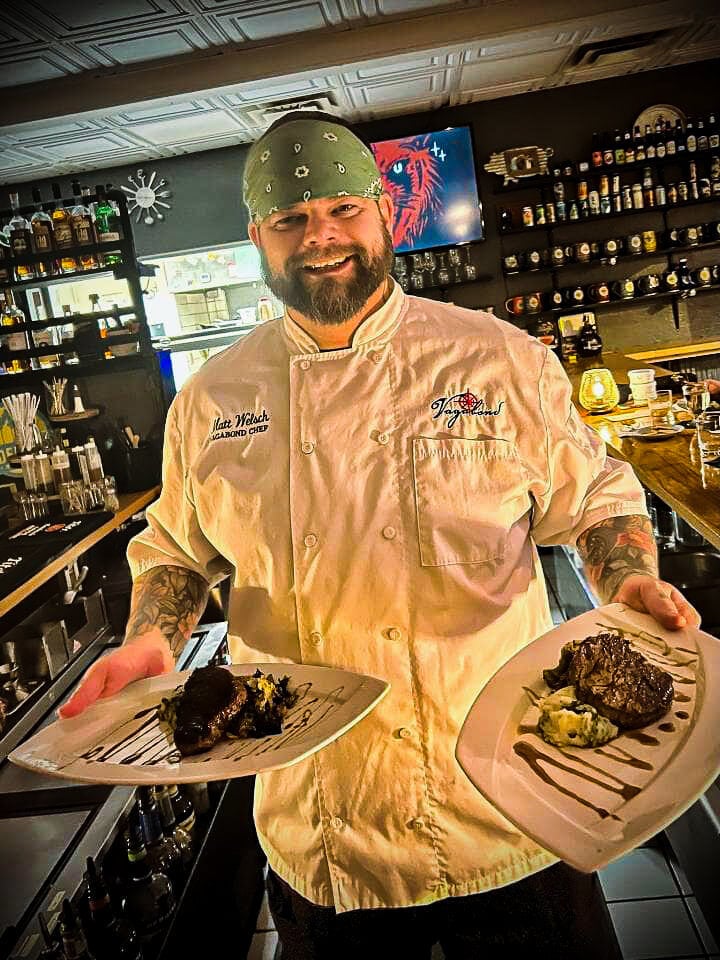
According to West Virginia chef, restaurateur, and travel writer Matt Welsch, few foods reflect regional culture as clearly as the hot dog.
“Hot dogs may be simple food, but they carry a whole lot of regional identity depending on where you’re standing when you eat one,” Welsch said. “Here in West Virginia, the hot dog is practically a cultural institution.”
A meal built for working people
The West Virginia hot dog’s roots trace to the state’s industrial expansion during the late 19th and early 20th centuries, when coal mines, railroads, steel mills, glass factories, and timber operations attracted workers from across the United States and abroad.
Employers needed inexpensive foods that could be prepared quickly and sold to laborers during long shifts. The hot dog proved ideal.
Portable, affordable, and filling, it became popular among miners, railroad workers, factory employees, and their families. Vendors often added homemade chili to create a more substantial meal, while mustard and onions provided flavor at little additional cost.
Read more: The history of Tudor’s Biscuit World and West Virginia breakfast culture.
The addition of slaw helped distinguish West Virginia’s version from those found elsewhere.
Served directly on top of the hot dog, the cool cabbage mixture balanced the warmth and richness of the chili while adding texture and helping stretch ingredients during economically difficult times.
Over time, the combination became a regional standard.
The West Virginia Slaw Line
Not everyone in West Virginia agrees on the role of coleslaw.
Food writers and hot dog enthusiasts often refer to an unofficial “West Virginia Slaw Line,” a cultural boundary separating regions where coleslaw is considered an essential hot dog topping from areas where it remains optional.
South of the line, which generally runs across the central part of the state, a hot dog “all the way” commonly includes mustard, chili sauce, onions, and coleslaw. In parts of northern West Virginia, however, many traditional hot dog stands serve their dogs with sauce, mustard, and onions, leaving slaw as an extra topping rather than a standard ingredient.
The debate is mostly good-natured, but it illustrates how strongly West Virginians identify with their local food traditions.
“A West Virginia slaw dog is a thing of beauty,” Welsch said. “A steamed bun, a good dog, mustard, chili—or as we tend to call it, simply ‘sauce’—slaw, and onion, stacked up in a specific order that people around here will absolutely argue about.”
The debates can be surprisingly serious.
“This is a tradition that we take just as seriously as who we root for in college ball or which church we attend every Sunday,” he said.
The influence of immigrant entrepreneurs
Many of West Virginia’s best-known hot dog restaurants were founded by immigrant families who arrived during the state’s industrial boom.
Greek entrepreneurs, in particular, played a significant role in shaping restaurant culture throughout Appalachia. Greek-owned lunch counters, diners, and drive-ins became fixtures in many communities, serving workers, travelers, and local families.
Many developed proprietary chili recipes that remain closely guarded today.
The influence of those immigrant-owned establishments can still be found in restaurants across the state, where family recipes are often passed through multiple generations.
The result is a wide variety of chili sauces that may differ from town to town but remain central to the West Virginia hot dog tradition.
A regional food with national connections
As founder of Vagabond Kitchen in Wheeling and creator of the “Vagabond Chef” travel project, Welsch has spent years documenting food traditions across the country.
His travels have reinforced how strongly communities identify with their local hot dog styles.
“Throughout my travels, I’ve seen dogs done in a myriad of ways, and all of them have been the right answer to a question you didn’t know you were asking,” Welsch said.
Regional variations remain common throughout the United States.
“Chicago loads theirs up with sport peppers and a pickle spear and will look at you sideways if you ask for ketchup,” Welsch said. “New York keeps it simple, sauerkraut and spicy brown mustard, no fuss. Down in the Carolinas, they’ve got mustard-based chili that’d surprise you.”
Welsch encountered dozens of variations while traveling through Idaho.
“On my travels as the Vagabond Chef, I posted up at Grumpy’s Goat Shack in Driggs, Idaho, and they had a menu with dozens of different dogs,” he said.
Later, while serving as executive chef for West Virginia State Parks, he developed a menu featuring 19 different hot dog variations for Mulligan’s at Pipestem Resort State Park.
Despite the differences, he sees a common thread.
“The hot dog is one of those rare foods that travels everywhere and belongs nowhere and everywhere all at once,” Welsch said.
Why the slaw matters
To visitors, the most unusual aspect of the West Virginia hot dog is often the slaw.
In many parts of America, coleslaw is served alongside a meal. In West Virginia, it is placed directly on the hot dog.
The topping adds crunch, sweetness, and texture while balancing the chili underneath. It is also one of the elements most likely to inspire debate.
Some restaurants favor sweeter slaws. Others prefer sharper recipes with more vinegar. Families often defend their preferred versions with considerable loyalty.
Those discussions help explain why the West Virginia hot dog remains more than a menu item. It is a food tied to local identity.
Regional variations across West Virginia
Like accents and local customs, hot dog traditions vary from one part of the state to another.
In Huntington and the western coalfields, chili-slaw dogs remain staples at drive-ins and neighborhood restaurants. The Kanawha Valley continues to support several longstanding establishments whose recipes have changed little over decades.
Northern West Virginia offers its own variations, while communities in the Eastern Panhandle often reflect culinary influences from neighboring states.
Yet throughout West Virginia, the combination of mustard, chili, onions, and slaw remains the standard against which other versions are measured.
Mention ordering a hot dog “all the way” or “with everything” almost anywhere in the state, and the expected toppings are immediately understood.
A food that brings people home
For former residents who have moved away, few foods generate as much nostalgia as a West Virginia hot dog.
Social media groups devoted to West Virginia culture frequently feature discussions about favorite hot dog stands and drive-ins. Former residents living elsewhere often describe stopping at a hometown restaurant shortly after returning to the state.
Welsch believes the reason is simple.
“What I love about it is that nobody’s wrong,” he said. “Your hometown hot dog is the right hot dog. The one you grew up eating is the one that tastes like summer. Always.”
The comment reflects the enduring appeal of a food that remains closely connected to place and memory.
For visitors, the West Virginia hot dog may be a regional specialty worth trying. For many residents, it remains one of the state’s defining traditions.
Simple, affordable, and widely available, the chili-slaw dog continues to tell a story about West Virginia’s industrial history, immigrant influences, and local communities—one bite at a time.
Slaw on dogs is a southern wv thing. Fairmont has the best hot dogs..
mustard, onions, chili and the chili is what makes it. If you make it to Fairmont, try Woody’s or Yann’s
Chili is NOT served on a WV hot dog! It is sauce.
There are zero beans. Sauce contains hamburger meat and a tomato based spicey sweet mix of ingredients.
Every county has their version and most every church has their own recipe handed down through generations.
If you ask for a hot dog with chili be prepared to get a funny look and an, “oh you mean sauce” comment.
My husband laughed, when after moving here, and ordering my first hot dog, I called it chili.
He quietly pulled his TN wife aside and taught her about WV and hot dog sauce.
Please, if you are going to purport to understand this beautiful sate and the customs of her equally beautiful people, please do us the credit of getting what we say reported properly. Thanks!
I am a life-long West Virginian and we, south of the slaw line have ALWAYS called it hot dog chili. A lot of people think that because it has NO beans, it can’t be referred to as chili. I feel the same way in the respect that you can’t call it a “sauce” if it has meat in it. It is all just what you are used to saying or what we all grew up referring to it as but just wanted to let you know that we in the central/southern part of the state would look at someone who asked for “sauce” and say “oh you mean chili”. So, with that being said, the reporting doesn’t bother me because it is only an opinion and the argument could go either way. I could say just what you said, word for word BUT with the word “chili” instead of “sauce”.
I am a life-long West Virginian and we living in the central/southern part of the state refer to it as hot dog “chili”. Always have and always will. People in our neck of the woods would give you the funny look if you asked for “sauce” and then say, “oh you mean chili”. We would use the same argument that you use in saying chili contains beans, but we would say a sauce does NOT contain meat. So, it is best to understand that each of us have a different opinion as to what it is called. Always have and always will. The reporting is only wrong in that the customs vary from region to region. Same as the slaw line does… Was this reported properly? I would say that it just needed to be said that the regions all differ in what they call their toppings…..
naw….not really. born & raised in WV on WV hot dogs….with chili & sweet slaw. Central North area. We all called it (& still do) hot dog chili. Please remember: not all chili has beans. Ours NEVER did. Just FYI Tennessee.
Back when I was growing up, the Big Wheel drive-in in Alderson served their slaw dogs on a kind of split roll bun, toasted on both sides. Don’t know if they still do but if they do, and you’re in Alderson, you owe it to yourself to have one.
I’m glad someone clarified that it’s not referred to as chili on the southern WV hot dogs. It’s hot dog sauce. Between that and the addition of slaw, I was flummoxed by the hot dogs I saw when I left the northern panhandle for school in southern WV.
Great article – so WV! Mickey’s in Harper used to serve maybe the best restaurant hot dogs I’ve ever eaten: golden grilled, side-sliced buns, creamy slaw, perfectly spiced sauce, flavorful dogs. Hot dog slaw should be a little on the sweeter side and very finely chopped, IMO.
I agree totally..
Hinton, WV had the best hot dogs with hot dog sauce etc. on a bun that was flat on both sides & toasted. New owners don’t use the same recipe that Kirk’s made. I LOVE a good hot dog with onions, sauce, mustard & slaw. Born & raised in WV, I’ve had good & not so good hot dogs. YANN’s in Fairmont is a good one, just don’t ask for ketchup.
Born and raised in northcentral WV, now resident of southern WV. ALWAYS have heard “hot dog, with mustard, chili, slaw, and onions.”. Never ever heard the word “sauce” until the recent FB and media debates.
CHILI (no beans) but certainly not SAUCE. And ALWAYS try to find ALL BEEF hot dogs (as opposed to those made with chicken “parts.” I think ketchup is an optional thing. Seldom have seen restaurants add it without it being requested by customer.