

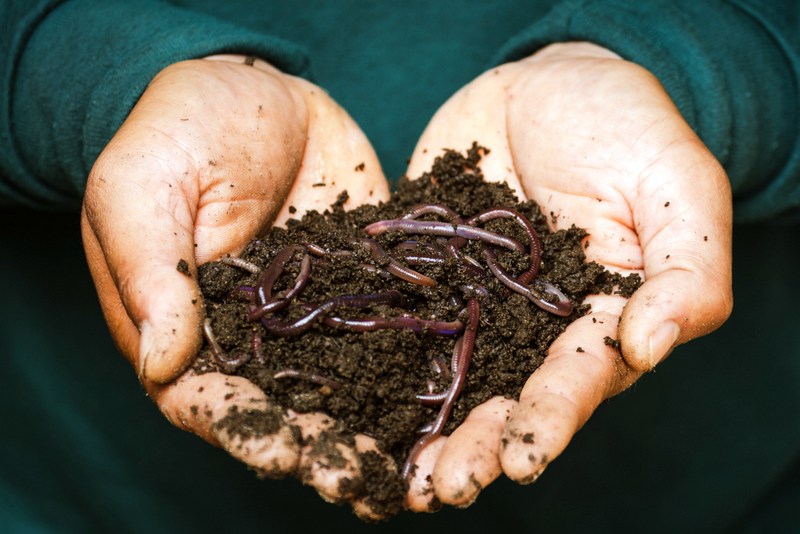
FLAT TOP, W.Va. — Worms are already making their presence known in the upper layers of the soil in early March, says a West Virginia permaculturist who can attest to the lore of the Worm Moon of March.

Justyn Marchese says he’s already observing the early-spring activity of worms at his farm on Flat Top Mountain near Ghent, West Virginia, the location of the Mavis Permaculture Institute.
This year, March’s full Moon (March 25, 2024) occurs after the spring equinox (March 19, 2024), making it the Paschal Moon. March’s full Moon will be the first full Moon of the spring season and, therefore, will determine the date of Easter this year.
Native American cultures called the first full moon of March the “Worm Moon” for good reason, he says, as the activity of worms in North America is a repeatable, observable phenomenon.
“‘I’ve been finding plenty of worms in the last week,” Marchese said. “About five days ago I started noticing the increase in worms—and so did my chickens and ducks.”
Snowmelt that would oversaturate the soil would typically cause worms to come to the surface to escape drowning, he said.
For millennia, cultures across the northern hemisphere named the moons after phenomena they associated with the seasons, and many of these names are very similar or identical across cultures.
According to legend, native tribes in North America referred to the full moon that rises in what’s now known as March as the Worm Moon due to the observable increase in activity among worms.
Published in 1818 in Lewiston, Maine, the Farmer’s Almanac has traditionally given the full moon of March the titles “Worm Moon,” “Crow Moon,” “Sap Moon,” “Crust Moon,” “Lenten Moon,” “Wind Moon.”
Sign up to receive a FREE copy of West Virginia Explorer Magazine in your email twice weekly. Sign me up!