
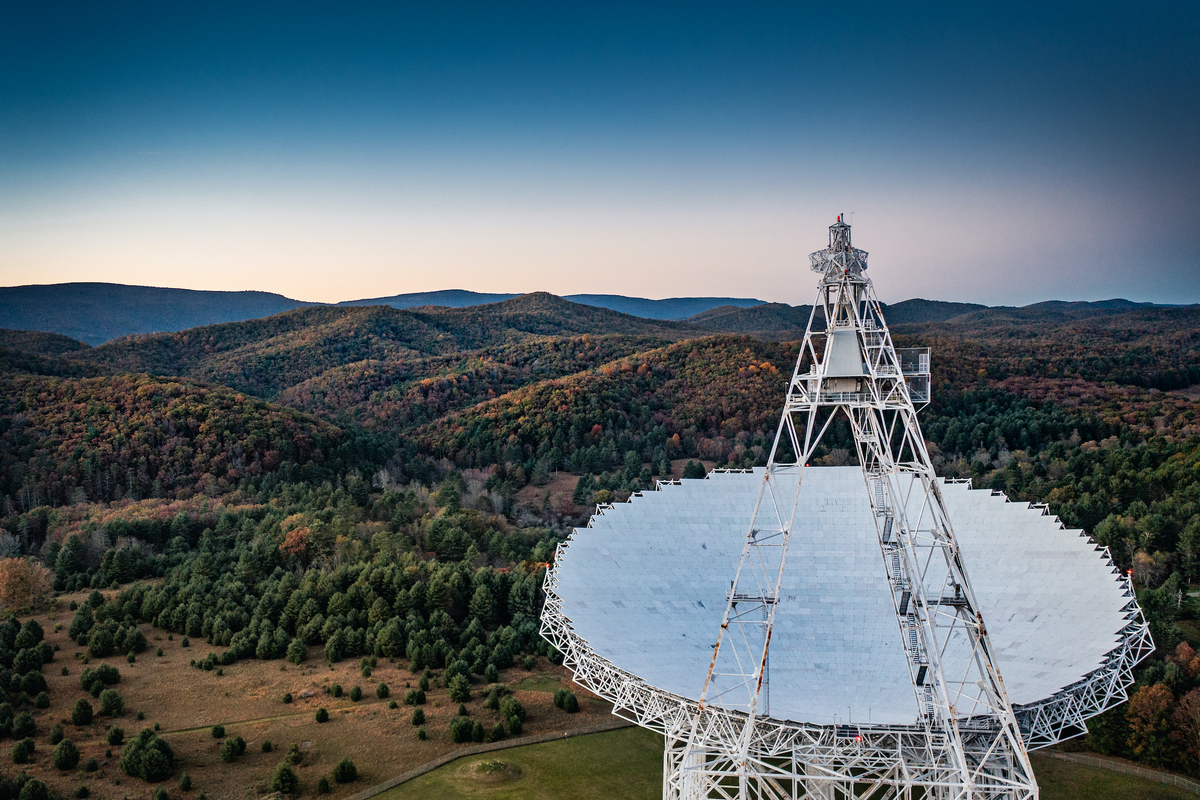
GREEN BANK, W.Va. — The Green Bank Telescope, the world’s largest fully steerable radio telescope, is at the forefront of a major scientific effort to unlock the secrets of gravitational waves, supermassive black holes, and the origins of the universe.

Backed by $5.9 million in funding from the National Science Foundation, researchers at West Virginia University are using observations from the telescope, also known as the Robert C. Byrd Green Bank Telescope, to study subtle ripples in spacetime known as gravitational waves.
The project builds on a landmark 2023 discovery that provided the first evidence of low-frequency gravitational waves moving through the cosmos.
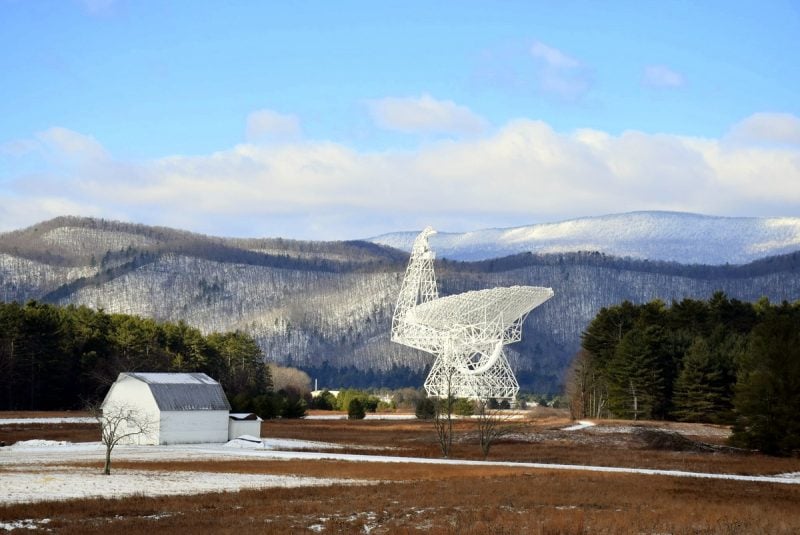
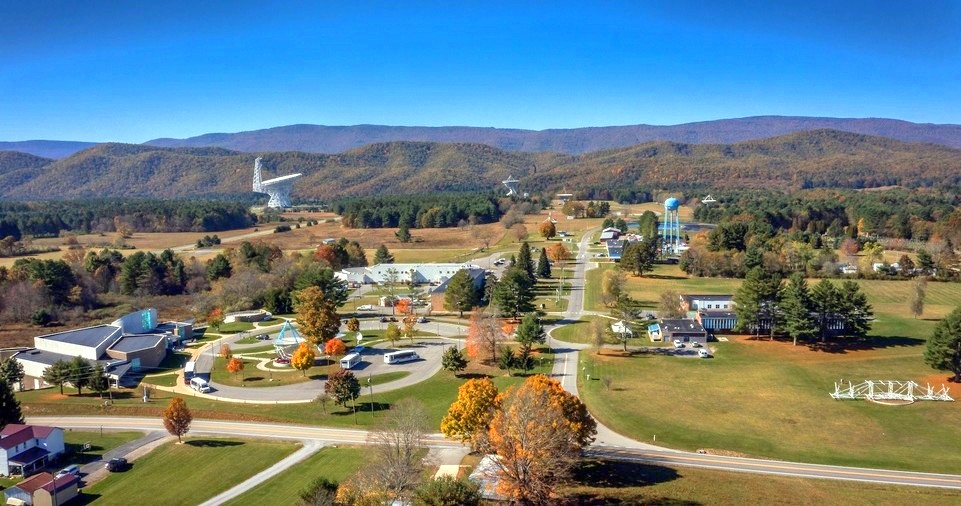
Located at the Green Bank Observatory in Pocahontas County, the Green Bank Telescope has been one of the world’s premier radio astronomy instruments since its completion in 2000.
Standing 485 feet tall and situated within the National Radio Quiet Zone, the telescope allows scientists to observe faint radio signals that would otherwise be overwhelmed by human-made interference.
Today, the Green Bank Telescope is the primary instrument in the international collaboration known as the North American Nanohertz Observatory for Gravitational Waves, or NANOGrav.
The latest National Science Foundation award supports researchers affiliated with the WVU Center for Gravitational Waves and Cosmology, including Maura McLaughlin, Eberly Family Distinguished Professor of Physics and Astronomy and a founding member of NANOGrav.
McLaughlin, along with fellow WVU scientists Sarah Burke-Spolaor and Emmanuel Fonseca, helped lead the collaboration that announced the first evidence of a gravitational-wave background in 2023, using data from radio telescopes, with the Green Bank Telescope making the largest contribution.

Green Bank Telescope tracks nature’s most precise clocks
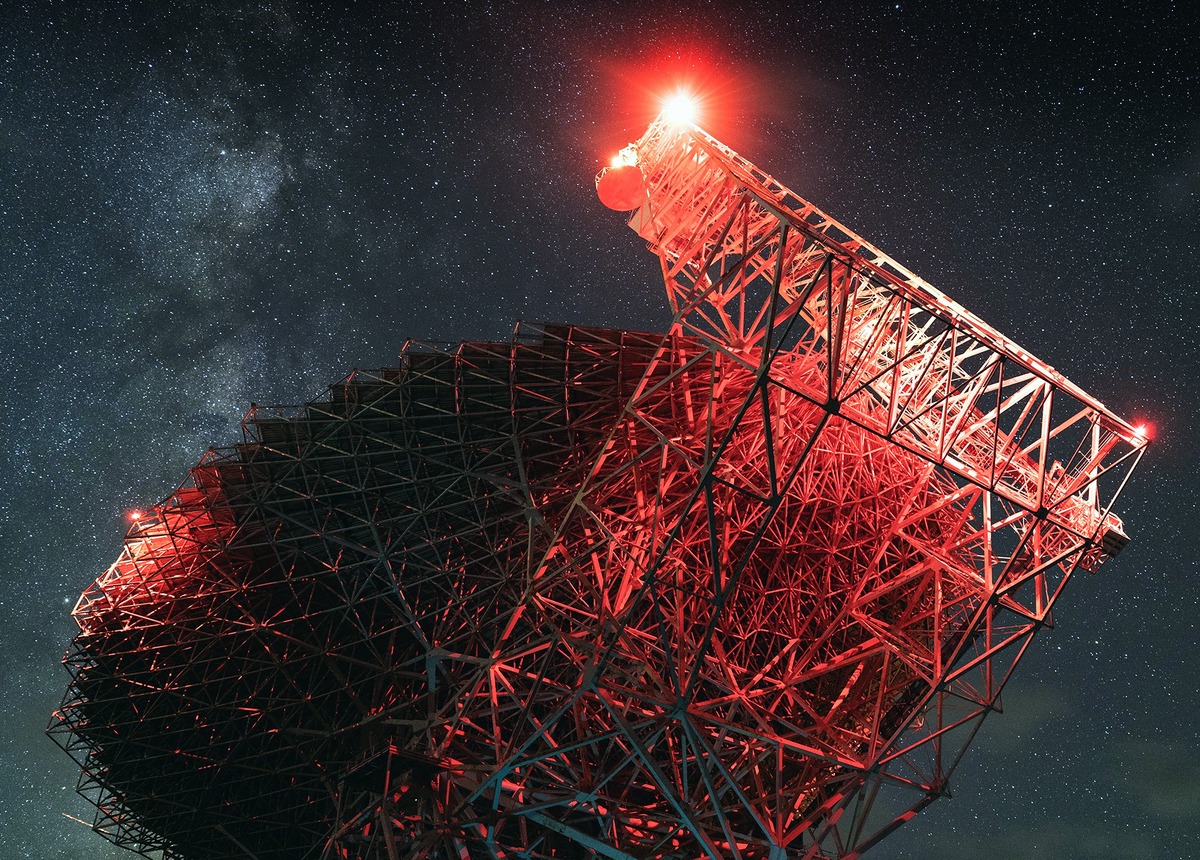
The Green Bank Telescope’s role in the project depends on its ability to monitor pulsars, rapidly rotating neutron stars that emit radio signals with extraordinary regularity. Scientists often describe pulsars as celestial clocks because their pulses arrive on Earth with remarkable precision.
By observing dozens of pulsars across the sky, researchers can detect tiny changes in the arrival times of their signals. These changes may occur when gravitational waves pass between Earth and the pulsars, stretching and compressing spacetime as first predicted by Albert Einstein’s theory of general relativity.
“We can detect that by measuring the tick of this clock, which will arrive a little bit earlier or later than it would have otherwise,” McLaughlin said.
The Green Bank Telescope observes nearly all of the pulsars used in the NANOGrav timing array, making it the single most important contributor to the project’s sensitivity. Other facilities participating in the research include Canada’s CHIME telescope and the Very Large Array in New Mexico, but Green Bank remains the backbone of the observing program.
Green Bank Telescope may reveal hidden black holes
Scientists believe the gravitational waves detected so far likely originate from pairs of supermassive black holes orbiting each other at the centers of merging galaxies. These enormous black holes can contain millions or billions of times the Sun’s mass and produce gravitational waves as they slowly spiral together.
Using the Green Bank Telescope, researchers hope to determine whether these black-hole pairs are responsible for the gravitational-wave background now being detected across the universe. If confirmed, the findings could transform scientists’ understanding of how galaxies evolve and how supermassive black holes grow over billions of years.
“We believe all galaxies have black holes at their centers,” McLaughlin said. “Sometimes galaxies merge with other galaxies, and the black holes form supermassive binary pairs that orbit each other.”
Because black holes emit no visible light, the Green Bank Telescope offers a unique way to study them indirectly through their gravitational influence. Researchers say the technique allows them to observe phenomena that cannot be detected through traditional optical astronomy.
Green Bank Telescope could probe the earliest moments of the Universe
The Green Bank Telescope may also help scientists investigate some of the most fundamental questions in physics. Researchers are exploring whether some of the gravitational waves now being detected originated shortly after the Big Bang.

Possible explanations include remnants of the early universe, such as hypothetical structures known as cosmic strings, and other exotic phenomena formed when the universe was less than a second old. Detecting such signals would offer a rare glimpse into conditions that existed at the dawn of cosmic history.
“If we can detect gravitational waves left over from the early universe, we could study physical conditions that existed fractions of a second after the Big Bang,” McLaughlin said.
The NSF funding will support continued observations and data analysis over the coming years as researchers seek to identify the sources responsible for the gravitational-wave background.
Green Bank Telescope inspires future scientists
Beyond its scientific mission, the Green Bank Telescope also serves as an educational resource for students nationwide. In July, Green Bank Observatory will host high school and undergraduate students, along with teachers, through the NANOGrav STARS and Pulsar Science Collaboratory programs, offering hands-on experience in cutting-edge astronomical research.
A separate NSF-funded initiative led by WVU is also expanding opportunities for community and technical college students through paid research assistantships tied to the project.

Researchers hope the next major breakthrough will be the detection of an individual supermassive black-hole pair rather than a combined background signal from many sources. Such a discovery could allow astronomers to identify the specific galaxy hosting the source and study it with multiple types of telescopes.
“If we detect an actual single source, that would be really exciting,” McLaughlin said. “When that happens, it will be a new era.”
As the search continues, the telescope remains one of the world’s most powerful tools for exploring the invisible universe.
From detecting gravitational waves and studying supermassive black holes to investigating echoes of the Big Bang, the Green Bank Telescope is helping scientists answer some of astronomy’s biggest questions while strengthening West Virginia’s reputation as a global center for scientific discovery.
Visiting Green Bank Observatory
Visitors to Green Bank can experience one of the world’s most important astronomical research facilities through a variety of tours, exhibits, and educational programs.
The observatory’s visitor center features interactive displays that explain radio astronomy, the search for extraterrestrial intelligence, pulsars, black holes, and telescope operations. Guests can learn how astronomers use radio waves to study objects invisible to optical telescopes while exploring exhibits designed for both children and adults.
A gift shop, an educational theater, and observation areas offer additional opportunities to engage with the science conducted on site.
The observatory is best known for guided bus tours that bring visitors close to the Robert C. Byrd Green Bank Telescope, offering an up-close view of the massive instrument as it scans the sky. Throughout the year, the observatory hosts special events, star parties, science workshops, and educational programs that draw students, teachers, and astronomy enthusiasts from across the country.
Surrounded by the Allegheny Mountains and protected by the National Radio Quiet Zone, the observatory offers a unique destination where visitors can combine scenic Appalachian landscapes with a firsthand look at cutting-edge scientific research.
Green Bank Observatory Science Center
Contact Information
- Phone: 304-456-2150
- Address: 155 Observatory Road, Green Bank, WV 24944
- Tours, events, and visitor information are handled through the Science Center.
The Science Center serves as the observatory’s visitor center and includes exhibits, the Galaxy Gift Shop, tour ticketing, and access to guided tours of the telescope complex. Admission to the Science Center is free, though guided tours require tickets.
For more information, visit:
Green Bank Observatory Science Center
Life inside West Virginia’s strange “radio quiet” zone
GREEN BANK, W.Va. — The universe whispers in radio waves, and if we listen carefully, we can hear its stories, but to listen, we must remain very quiet. One of the quietest places on Earth, Green Bank provided scientists with the silence they needed to conduct their experiments and listen. READ THE FULL STORY HERE.