
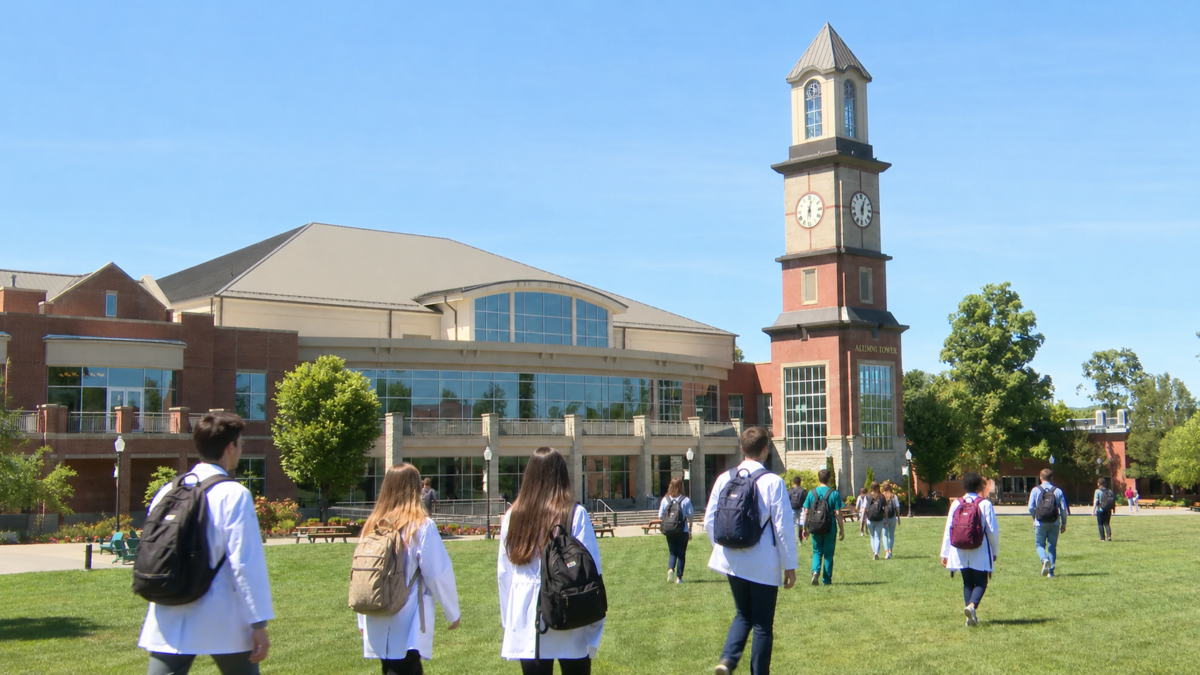
LEWISBURG, W.Va. — One of the West Virginia’s best-known medical practices will begin operating under a new name this week as the Robert C. Byrd Clinic officially becomes “WVSOM Health” on July 1.
Officials at the W.Va. School of Osteopathic Medicine say the transition is designed to more closely unite patient care, physician education, and community health under a single academic clinical enterprise while preserving the clinic’s longstanding commitment to serving residents of southeastern West Virginia.
Patients can expect the same physicians, services, and appointments, with officials emphasizing that medical care will continue uninterrupted throughout the transition.
A stronger connection to the school of osteopathic medicine
The rebranding aligns the clinic more closely with the medical school, where it serves as the primary clinical training site for medical students, residents, and faculty physicians.
The initiative was approved by the school’s board of governors in March, following months of planning to strengthen the clinic’s long-term sustainability and expand its role in educating future physicians.
“The transition of the Robert C. Byrd Clinic to WVSOM Health is a milestone in the histories of both institutions,” school president James W. Nemitz said.
“The restructuring and rebranding of the clinic will better align the missions of both organizations to enhance patient care and education of WVSOM medical students. I look forward to a new era of health care in the Greenbrier Valley.”
Officials said the transition is intended to better integrate clinical operations with the school’s educational mission while creating a stronger financial and organizational framework for future growth.
Nearly 50 years of caring for the community
The clinic traces its roots to 1976, when it opened as the West Virginia School of Osteopathic Medicine Clinic. It was later relocated to the northern portion of the school’s Lewisburg campus and was renamed the Robert C. Byrd Clinic in 1997.
Throughout its history, the practice has served two closely connected purposes—providing primary health care for local residents while giving WVSOM students hands-on clinical experience under the supervision of faculty physicians.
Today, the clinic employs more than 40 physicians, nurse practitioners, physician assistants, and physician residents.
Its services include family medicine, internal medicine, pediatrics, osteopathic neuromusculoskeletal medicine, behavioral health, same-day and acute care, diabetes education, lifestyle medicine, medical acupuncture, social services, and culinary medicine.
Supporting the next generation of rural physicians
Because the school was founded to address physician shortages in rural communities, officials say the clinic plays an essential role in preparing future doctors to practice in underserved areas throughout West Virginia and Appalachia.
Hilary Hamric, the school’s associate dean of clinical education and chair of the clinic’s board of directors, said the organization has remained focused on the same mission even as health care has evolved.
“Over time, the clinic has evolved alongside changes in health care, but its mission has remained the same: to serve as an exceptional site for patient care that naturally integrates teaching and learning,” Hamric said.
She added that clinic employees and board members remain committed to fostering academic growth while providing compassionate, high-quality care for patients.
“We believe the clinic is on a strong path toward continued success, and an important part of that journey is the transition of the Robert C. Byrd Clinic into WVSOM Health,” she said.
Preparing for the future
The transition team was led by the school’s chief human resources officer, Leslie Bicksler, who said the organizations have spent the past year working together to create a seamless changeover.
“During the past year, both organizations have worked in close partnership to ensure a thoughtful and seamless transition to WVSOM Health,” Bicksler said.
“This transition strengthens the clinic as the school’s academic clinical program, creating a more integrated environment for education, patient care, and community service. At its core, this effort is about our students and our community.”
Officials say the transition includes four major priorities—establishing the WVSOM Health identity, modernizing clinical practice operations, strengthening physician education and residency training, and creating a sustainable financial framework to support both the clinic and the medical school’s long-term mission.
More than a new name
Mary Page Nemcik, who will serve as executive director of WVSOM Health, said the rebranding reflects the clinic’s continued evolution as an academic medical practice dedicated to improving health care in rural West Virginia.
“The rebranding to WVSOM Health reflects more than a new identity,” Nemcik said. “It marks the clinic’s evolution to an academic clinical enterprise where patient care, education, enhanced technology, and the distinct whole-person philosophy of osteopathic medicine come together to improve patient outcomes, broaden access, and shape the next generation of rural physicians.”
She said the closer alignment with the school will strengthen the organization’s focus on patient-centered care while expanding opportunities for clinical excellence, research, innovation, and community engagement.
Beginning July 1, patients will begin seeing the new name on signage, communications, and other materials. Officials say while the clinic’s identity is changing, its mission of caring for patients and educating future physicians will remain the same.
Read also: W.Va. Osteopathic School top for primary care residents
What is osteopathic medicine?
Osteopathic medicine is a branch of medical practice that emphasizes treating the whole person rather than focusing solely on disease or symptoms. Doctors of Osteopathic Medicine, or D.O.s, receive training comparable to physicians with M.D. degrees and are licensed to practice medicine, prescribe medications, and perform surgery in every state.
In addition to traditional medical training, osteopathic physicians receive hundreds of hours of instruction in the body’s musculoskeletal system and learn osteopathic manipulative treatment, a hands-on approach that can help diagnose and treat certain conditions involving muscles, joints, and nerves.
The W.Va. School of Osteopathic Medicine was founded in 1972 with a mission of improving access to health care in rural communities. That mission continues to shape the school’s curriculum, which emphasizes primary care, preventive medicine, and caring for patients in medically underserved areas. Today, graduates practice in every medical specialty, although the school remains nationally recognized for producing physicians who serve rural communities and enter primary care.
