
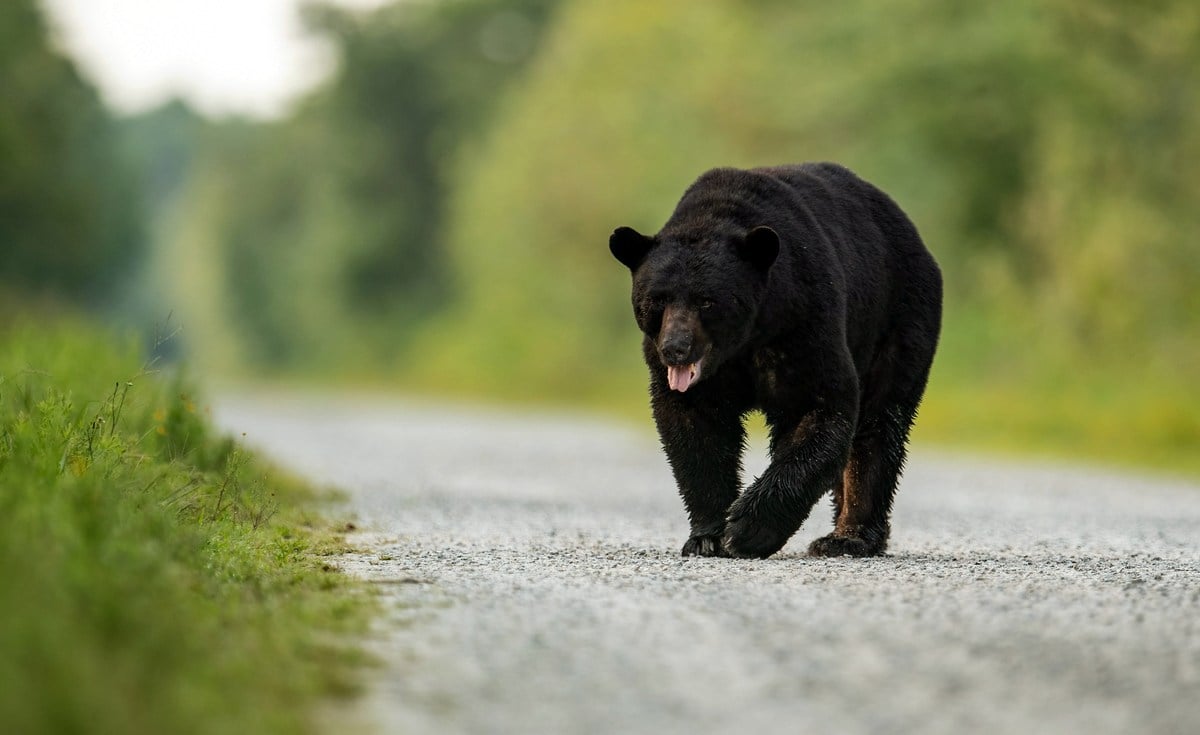
CHARLESTON, W.Va. — From doorbell videos to cell phone clips shared on Facebook, black bears seem to be appearing almost everywhere in West Virginia this summer.
The surge in online sightings has many residents wondering whether the state’s bear population has suddenly exploded.
According to Colin P. Carpenter, black bear project leader for the W.Va. Division of Natural Resources, the answer is more complicated. While black bears are now established across the state, one of the biggest reasons people are noticing them more is that nearly everyone now carries a camera.
“Everyone’s got them now,” Carpenter said, referring to the widespread use of home security cameras and neighborhood-sharing apps that document encounters once witnessed by only a handful of people.
That technology has made sightings far more visible, even though sightings in West Virginia have become increasingly common over many years, not overnight.
Bears now roam every county
Black bears have made a remarkable recovery in West Virginia over the past several decades, Carpenter said.
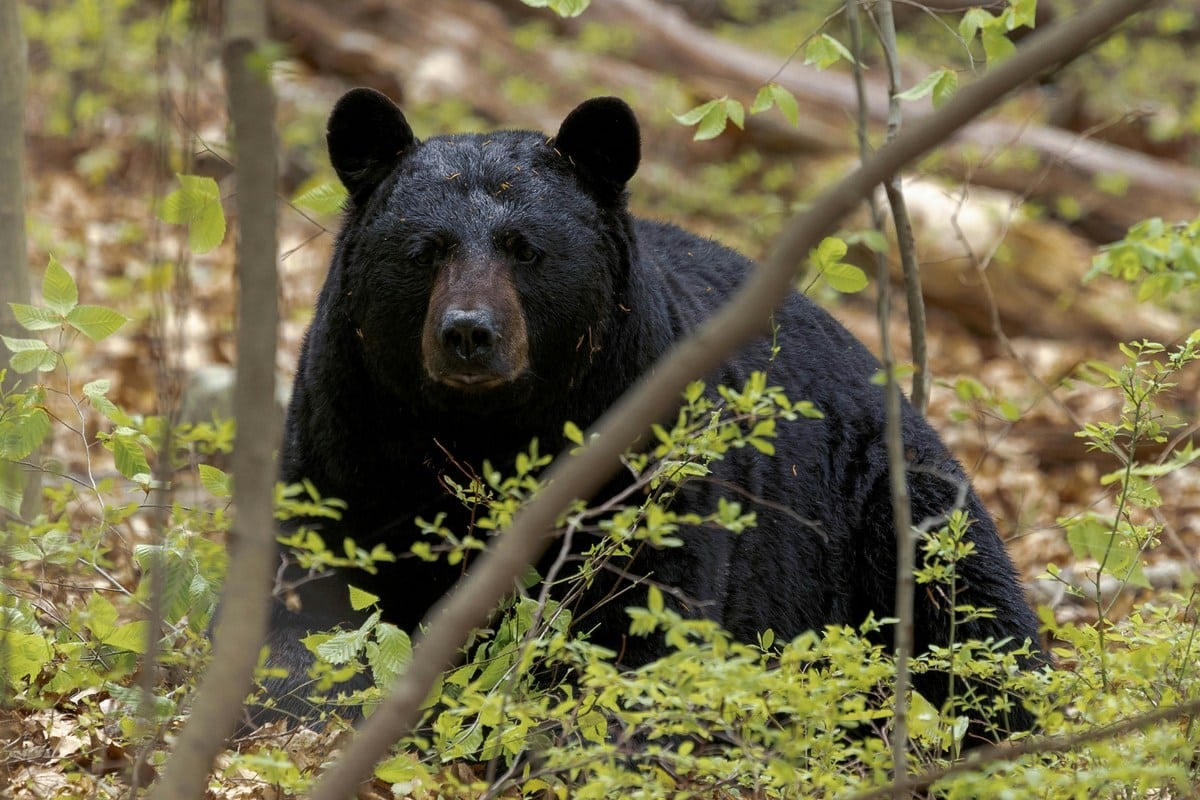
Bears now occupy every county in the state, and hunters harvest bears in nearly every county each year. That statewide expansion has occurred as wildlife managers have carefully adjusted hunting regulations and forests have reclaimed thousands of acres of former farmland.
“We’ve got great bear habitat in the state,” Carpenter said. As farms across western West Virginia were abandoned over the past half-century, many naturally reverted to forest.
“All that stuff has now grown back into forest, which is what bears love,” he said.
The division also carefully manages bear numbers through regulated hunting seasons. After expanding hunting opportunities beginning in 2007 to slow population growth in traditional mountain counties, the agency achieved its management goals and adopted more conservative regulations beginning in 2022, allowing those populations to resume gradual growth while continuing to manage expanding populations elsewhere in the state.
July is one of the busiest times in the bear world
Summer also marks one of the most active periods in a black bear’s annual cycle. Adult males roam widely in search of mates during the breeding season, while females drive away the cubs they raised over the previous 18 months.
Those newly independent young bears are now searching for territories of their own, often traveling through unfamiliar areas where people are more likely to encounter them.
Read also: Bear activity increasing in West Virginia parks as officials urge visitors to be “Bear Aware.”
“There’s a lot of shuffling going on in the bear world,” Carpenter said.
Ironically, while sightings may increase, conflicts with people often decline during July.
In spring, bears emerging from winter dens rely heavily on insects and fresh vegetation while aggressively searching for easy meals around homes. By midsummer, however, blackberries, raspberries, and other native fruits become abundant, drawing many bears back into the forest.
Later in the season, acorns, hickory nuts, and other hard mast become their primary food source.
“This is kind of the lull of the summer as far as human-bear conflict because we have natural food becoming available now,” Carpenter said.
Bears adapt better than people expected
Wildlife biologists once believed black bears required vast, remote wilderness to survive, but research over the past several decades has shown otherwise.
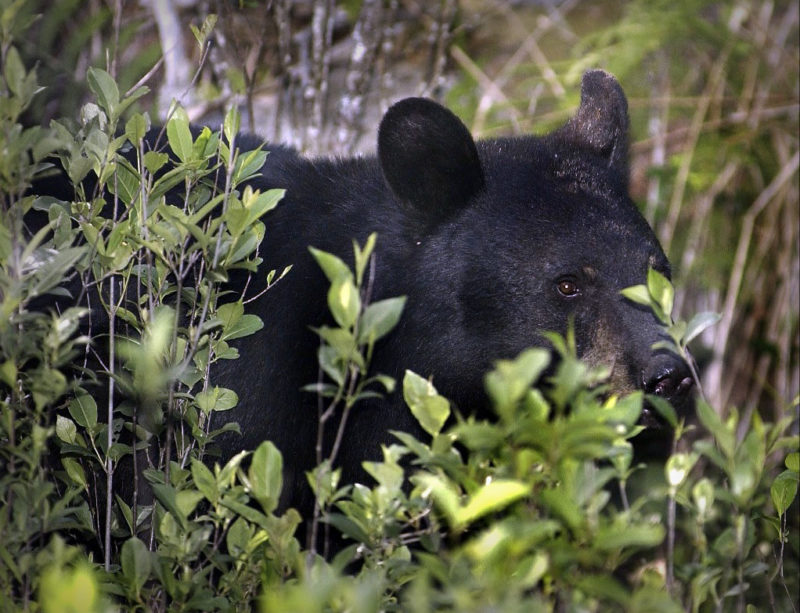
“They can survive anywhere they’ve got food, cover, and water,” Carpenter said. “They do fine around people. It’s often the people who don’t do fine around them.”
That adaptability has helped bears successfully recolonize much of the Mountain State as forests mature.
Read also: Why West Virginia may be the wildest state east of the Mississippi

The biggest mistakes homeowners make
Despite bears’ ability to thrive in wild habitats, most nuisance complaints begin with people unintentionally providing food.
Carpenter said the three biggest attractants are:
- Household garbage
- Bird feeders
- Pet food
He recommends keeping trash indoors until pickup day whenever possible, feeding outdoor pets only enough food for a single meal, and removing bird feeders during spring and summer.
Birds have plenty of natural food available during warm weather, while sunflower seeds provide bears with an easy, calorie-rich meal.
“If a bear can go and eat two pounds of black oil sunflower in 15 minutes,” Carpenter said, “he’s going to pick the sunflower.”
Read also: What to do if you encounter a black bear in West Virginia
Stay alert on mountain highways
Drivers should also remain watchful this time of year. The recently installed bear crossing sign along Interstate 64 highlights one area where collisions are common, but Carpenter said bears can cross highways almost anywhere in West Virginia’s mountains.
They are especially likely to be struck where roads cut through mountain ridges that bears naturally follow, he said.
Among the better-known collision areas are on U.S. 19 on Powell Mountain, north of Summersville; on Interstate 79 between Frametown and Burnsville; and on Interstate 77 between Pax and Mossy.
Learn to live with bears
For homeowners seeking more information, Carpenter recommends BearWise.org, a nationwide educational website created by black bear biologists. The site offers science-based advice on preventing conflicts, securing attractants, and safely living in bear country.
As black bears continue to thrive across West Virginia, Carpenter said that understanding their behavior—and removing the foods that attract them—remains the best way for people and bears to coexist safely.
About black bears in North America
Black bears are among the most successful large mammals in North America. Once driven to the brink of disappearance by unregulated hunting and habitat loss, the species has made a remarkable recovery thanks to wildlife conservation, forest regeneration, and carefully managed hunting seasons.
Despite their size, bears are generally shy and prefer to avoid people. Most encounters end when the animal quietly retreats. However, bears can lose their natural wariness if they repeatedly find food around homes, increasing the likelihood of future visits. Residents can help prevent conflicts by removing attractants, storing trash in bear-resistant containers, cleaning outdoor grills, and bringing bird feeders indoors when bears are active.
Black bears are omnivores, eating a wide variety of foods throughout the year. Their diet includes berries, nuts, insects, grasses, acorns, and occasionally small animals or carrion. During late summer and fall, they enter a period called hyperphagia, consuming thousands of calories each day to build fat reserves for winter.
Adult males typically weigh between 150 and 400 pounds in eastern North America, though exceptionally large individuals can exceed 500 pounds. Females are considerably smaller. Cubs, usually born in January while the mother is denned, remain with her for about 17 months before striking out on their own.
As forests continue to mature and more people share photos and videos of wildlife on social media, they have become one of West Virginia’s most visible conservation success stories. Learning to live alongside them safely helps ensure that both bears and people can continue to thrive.
Thank you for all of the great and helpful information.
Thanks for the great article.
When I was in High School (60-64) in WV the estimated black bear population was estimated at 1300 to 1500 with farmers killing bears which bothered me and I thought the better way was for the state to reimburse for a bear kill to help increase their numbers.
I understand river otters have been seen on the Tygart River.
I am now a resident of Virginia and try to keep up on my beloved state.
Good story! Been seeing those chased off cubs in my yard lately. Life in West Virginia is always interesting.
My neighbor’s have noticed an increase in bear sightings since last yr here in Barbour Co.In 25 yrs I never had a bear encounter until last yr.I walk my dog on a country rd almost daily and saw a bear last yr in spring and a huge one in the fall.Each bear didn’t even look at us, just walked slow across the road.My dog literally froze and watched it walk away.I heard a bear dropping out of a tree several times,sounded like someone dropping a duffle bag.I’ve also hear warning noises.My dog alerts me now and won’t walk down the road if she smells or sees something.I admit I’m nervous walking now even with bear spray.Our area is about 2 miles from Tygart river in wooded areas.Lots of wildlife seen on our walks!No bear hunting in our area so it’s probably allowed repopulation here.
I live in Southern WV, Raleigh County, and have had 3 black bears sightings this summer, but on the side of busy high traffic roads. I seen 2 in Prosperity, on the 4 Lane.. Could have been the same bear, yes. Two separate sightings.