
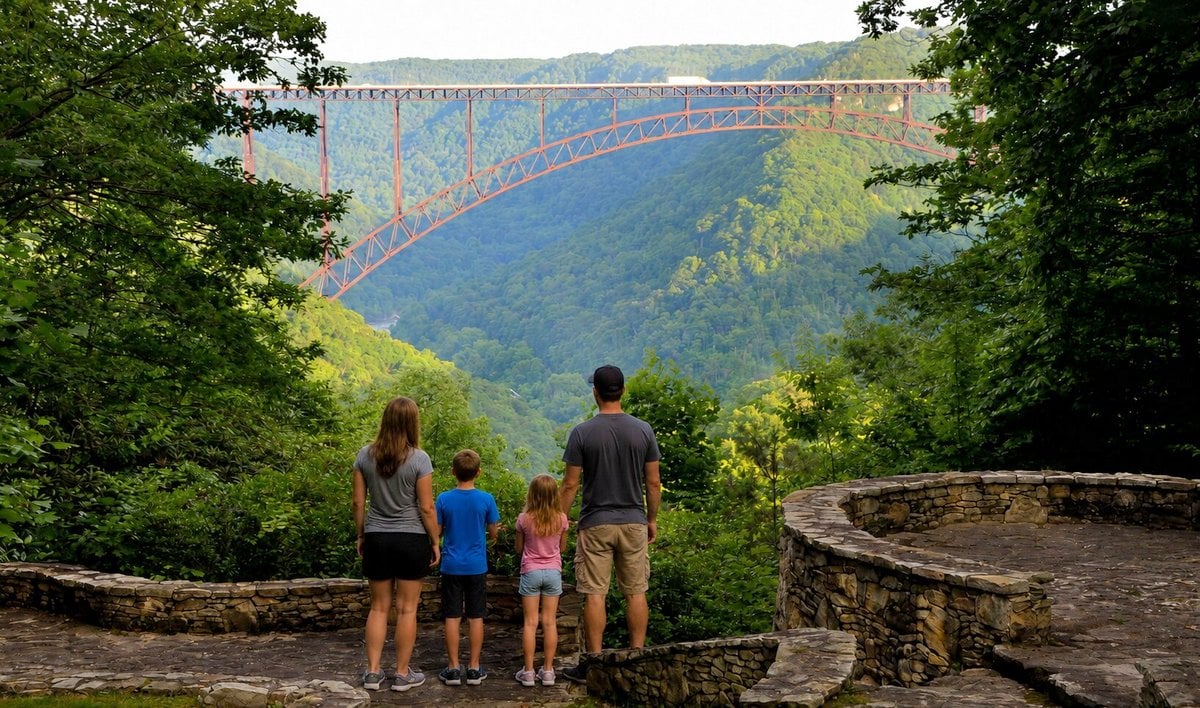
FAYETTEVILLE, W.Va. — Travelers arrive from Washington, Pittsburgh, Charlotte, and other metropolitan areas, expecting to spend a day at the New River Gorge before continuing their vacation. Many leave wondering why they hadn’t planned for several more days.

It’s a reaction Tabitha Stover hears repeatedly. “One of the things I hear most from visitors, especially those coming from larger cities, is, ‘I had no idea there was this much to do,'” said Stover, executive director of the Fayetteville Convention and Visitors Bureau.
Many first-time visitors approach the New River Gorge as they would a scenic overlook or a landmark—a place to photograph the famous bridge, hike a trail or two, and move on.
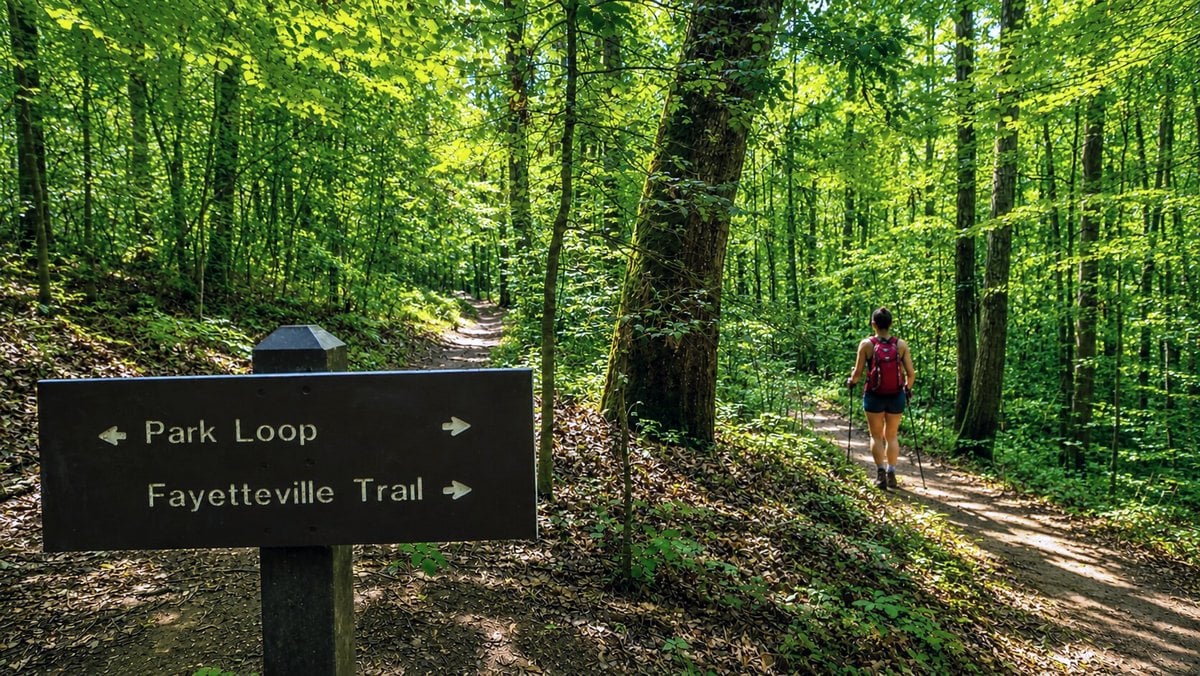
Instead, they discover that one of America’s newest national parks is less a single attraction than an expansive mountain region filled with rivers, forests, historic towns, and outdoor recreation spread across four counties.
By the time they leave, Stover said, many reach the same conclusion. “‘We should have planned to stay longer.'”
A national park larger than many expect
For travelers unfamiliar with southern West Virginia, the name “New River Gorge” can suggest a single canyon around the iconic steel arch bridge near Fayetteville, though the reality is considerably larger.
The New River Gorge National Park and Preserve extends more than 50 miles along one of North America’s oldest rivers, protecting more than 70,000 acres across Fayette, Raleigh, Summers, and Nicholas counties.
Within that landscape lie dozens of trailheads, waterfalls, overlooks, historic coal-mining communities, river access points, and public lands. Some visitors spend an entire weekend exploring just one section before realizing they’ve barely scratched the surface.

“A lot of folks don’t realize the park has a footprint that spans multiple counties, so there is a lot to explore,” Stover said.
That realization often reshapes how visitors view the destination. Rather than treating the gorge as a stop between larger attractions, many begin planning return trips centered entirely on the region.
Beyond the famous bridge
The New River Gorge Bridge remains the area’s best-known landmark, drawing photographers, road trippers, and sightseers year-round, but Stover says visitors soon discover that the bridge is only an introduction.
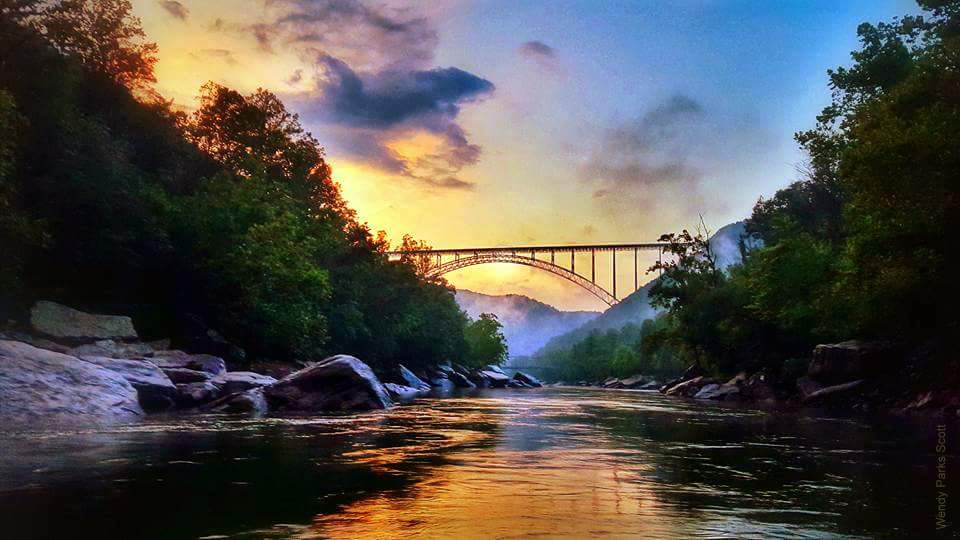
They find miles of hiking trails leading to waterfalls and panoramic overlooks. Outfitters launch rafting trips ranging from calm family floats to internationally renowned whitewater. Mountain bikers explore an expanding network of trails, while anglers, climbers, and birdwatchers spread throughout the surrounding forests.
“They discover everything from waterfalls and scenic hikes to world-class whitewater rafting, rock climbing, mountain biking, and small-town experiences like Fayetteville,” Stover said.
For many travelers accustomed to national parks dominated by a single central attraction, the New River Gorge offers something different—a collection of experiences connected by winding mountain roads and historic communities, rather than a single destination.
Not Just for adrenaline seekers
The New River Gorge has spent decades building an international reputation as one of the country’s premier destinations for whitewater rafting and rock climbing. Images of kayakers plunging through rapids and climbers scaling sandstone cliffs have become synonymous with the region.

Those adventures remain a major draw, but Stover said they represent only part of what visitors find upon arrival.
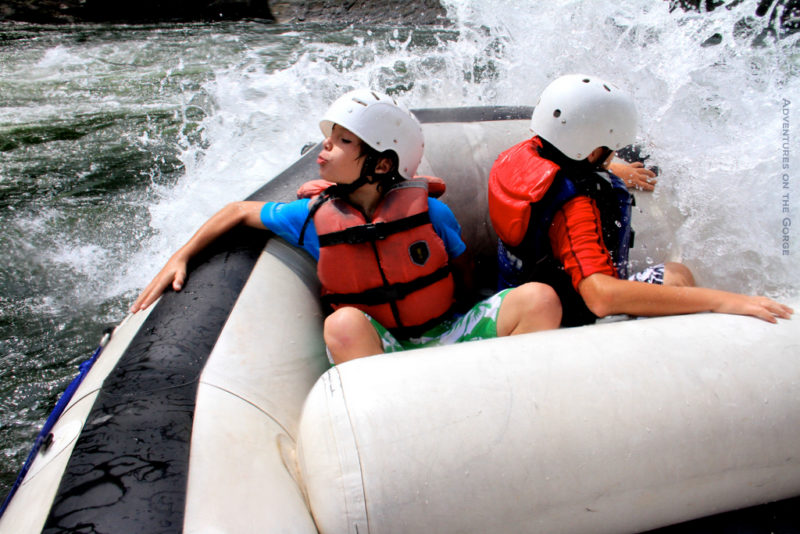
“They’re also often surprised that it isn’t just for extreme adventurers,” she said. “You can find beginner-friendly biking trails, gentle Class I–III rafting trips, family hikes, and guided experiences that make the outdoors accessible to almost anyone.”
That accessibility has broadened the park’s appeal since its designation as a national park and preserve in 2020. Families with young children, retirees, couples seeking a weekend getaway, and travelers who simply enjoy scenic drives increasingly find itineraries tailored to their interests.
Many rafting outfitters, for example, offer relaxed float trips on the New River’s upper reaches, where broad pools and gentle rapids let beginners experience the river without tackling the legendary Class IV and V whitewater farther downstream. Guided fishing trips, horseback riding, zip lines, and aerial adventure parks offer additional ways to experience the landscape without specialized skills.
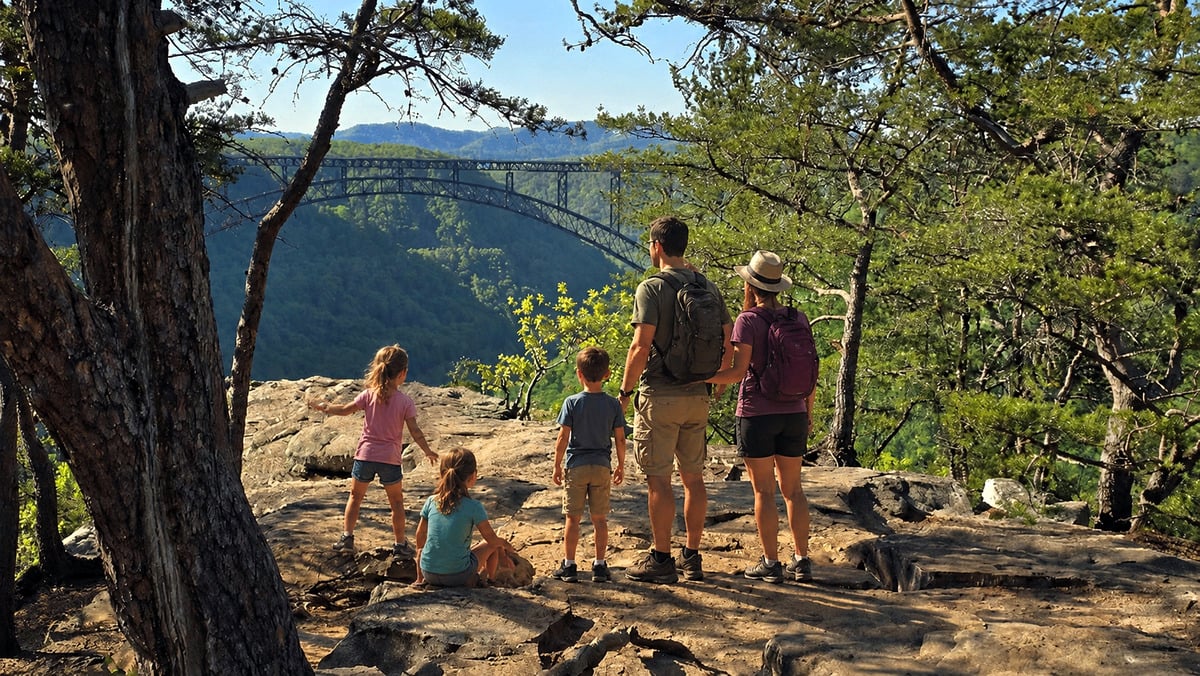
The park’s extensive trail system offers similar choices. While experienced hikers can spend a day on rugged backcountry routes, others may opt for short walks to overlooks, waterfalls, or historic sites that require little more than comfortable shoes.
For visitors who have spent much of their lives in urban environments, even simple experiences often become memorable.
Watching the morning fog lift from the gorge. Standing beneath a waterfall after a short woodland walk. Eating lunch on the courthouse square in Fayetteville before browsing local shops. Listening to the river from a quiet overlook instead of city traffic.
Those moments, Stover said, often reshape visitors’ expectations of what a national park vacation can be.
Read More: Here’s why West Virginia is the East’s premier whitewater rafting capital
Small towns become part of the experience
Visitors rarely expect the surrounding communities to be highlights of their trip, Stover says. Many arrive focused on hiking trails or rafting reservations, only to discover that towns such as Fayetteville offer an experience distinct from the park itself.
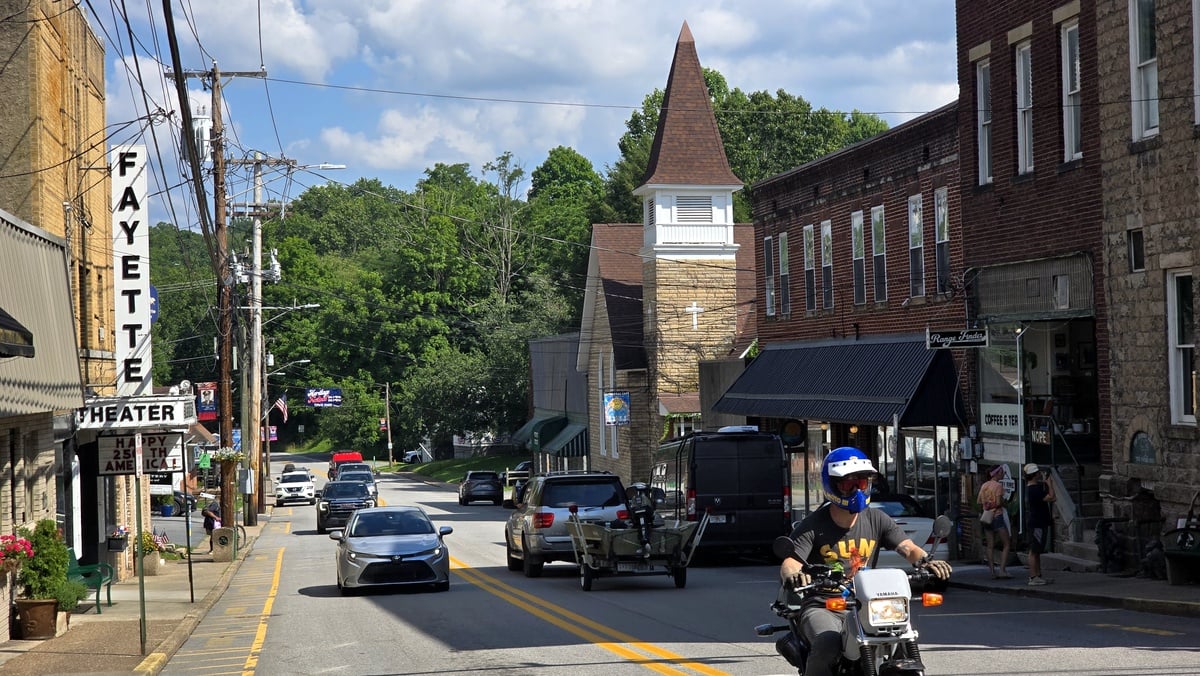
Independent restaurants, coffee shops, outfitters, galleries, and locally owned boutiques encourage visitors to slow down between outdoor adventures. Historic streets, easily explored on foot, contrast sharply with the pace of larger metropolitan areas.
That combination of outdoor recreation and small-town hospitality has become one of the region’s defining characteristics.
Unlike many national parks, where visitors spend most of their time within park boundaries before returning to distant lodging, visitors to the New River Gorge often move naturally between public lands and neighboring communities throughout the day.
Breakfast at a local café may be followed by a morning hike, an afternoon rafting trip, and an evening concert or dinner downtown—all within a short drive.
The result is a destination where the communities surrounding the park become part of the vacation rather than simply places to spend the night.
For many travelers, that is an unexpected surprise—and one more reason a single day rarely feels like enough.