
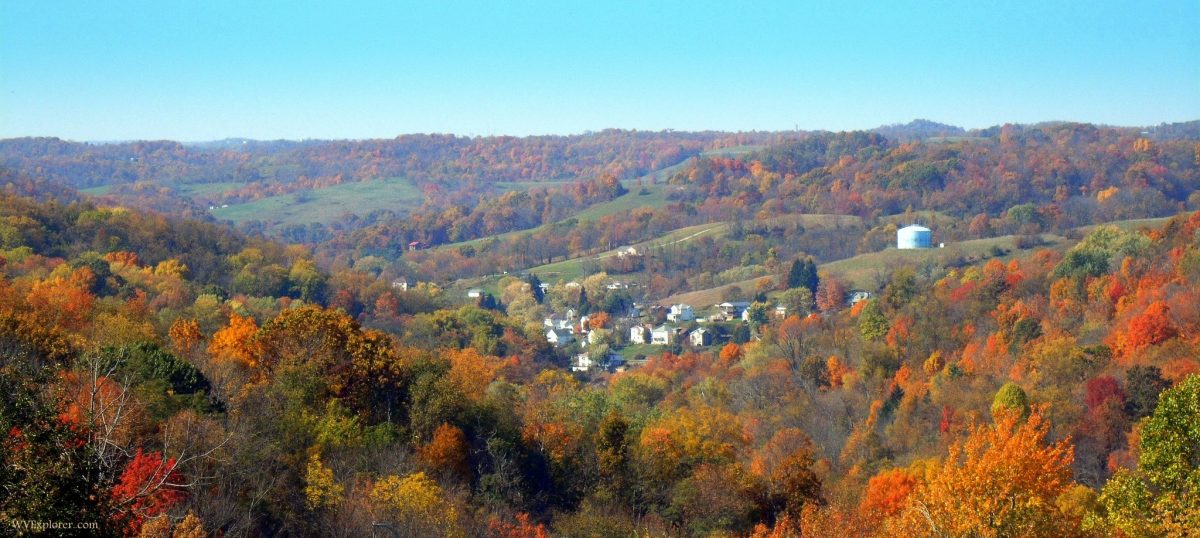
West Virginia is home to hundreds of cities, towns, and unincorporated communities—from its largest population centers, Charleston, Huntington, and Morgantown, to historic mountain and river towns such as Harpers Ferry, Lewisburg, Thomas, and Thurmond.

Our statewide guide includes more than 300 communities, with individual guides to local history, attractions, lodging, recreation, and nearby destinations. Use the alphabetical directory below to find a West Virginia city, town, or community, or explore the state’s largest cities and the history and geography that shaped its communities.
List of West Virginia Cities and Towns
10 largest cities in West Virginia
West Virginia’s largest cities are relatively small by national standards, reflecting a population historically distributed among hundreds of communities in mountain valleys and along major rivers. Charleston is the state capital and largest city, followed by other major population centers including Huntington, Morgantown, Parkersburg, and Wheeling.
| Rank | City | Population | ||
|---|---|---|---|---|
| 1 | Charleston | 46,117 | ||
| 2 | Huntington | 44,815 | ||
| 3 | Morgantown | 30,293 | ||
| 4 | Parkersburg | 28,593 | ||
| 5 | Wheeling | 25,680 | ||
| 6 | Martinsburg | 19,211 | ||
| 7 | Weirton | 18,133 | ||
| 8 | Fairmont | 18,035 | ||
| 9 | Beckley | 16,373 | ||
| 10 | Clarksburg | 15,562 |
The rankings are based on the U.S. Census Bureau’s July 1, 2025, population estimates, the most recent completed set of municipal population estimates available. Population rankings tell only part of the story in West Virginia, where some of the state’s most historically significant and heavily visited communities have populations numbering only in the hundreds or thousands.
Why West Virginia has so many small towns
West Virginia’s mountains and rivers strongly influenced where its communities developed. Before modern highways, ridges separated neighboring valleys, while rivers provided natural transportation corridors and locations for settlements, mills, and industry. Charleston grew along the Kanawha River, Huntington and Wheeling along the Ohio River, and Morgantown and Fairmont along the Monongahela River system.
Industrialization reinforced that settlement pattern during the late 19th and early 20th centuries. Railroads pushed deep into mountain valleys to reach coal and timber, and communities developed around railroad stations, mines, sawmills, and factories. Some became important regional cities, while others remained small company towns or lost much of their population after the industries that created them declined.
Historic towns in West Virginia
West Virginia communities preserve several distinct periods of American history. Shepherdstown and Romney trace their origins to the colonial frontier, while Harpers Ferry became nationally significant through transportation, industry, and John Brown’s 1859 raid. Wheeling later played a central role in transportation, manufacturing, and the political events surrounding West Virginia’s creation during the Civil War.
The state’s industrial towns preserve another chapter of that history. Bramwell became associated with the wealth of the southern coalfields, Thurmond developed as an important railroad center in the New River Gorge, Matewan became nationally known through the conflicts of the West Virginia Mine Wars, and Cass survives as a remarkably intact timber and railroad community.
Mountain towns and outdoor destinations
Many West Virginia communities now serve as gateways to nationally significant outdoor recreation areas. Fayetteville, Oak Hill and Hinton provide access to the New River Gorge National Park, while Davis and Thomas lie near Blackwater Falls and Canaan Valley. Marlinton provides access to the Greenbrier River and Monongahela National Forest, while Summersville is closely associated with Summersville Lake and the Gauley River.
This relationship between communities and their surrounding landscapes is central to WV Explorer’s city and town guides. Individual community pages connect readers with nearby parks, rivers, historic sites, attractions, lodging, and recreation, making the directory above a starting point for exploring the state.
Explore West Virginia communities
West Virginia Explorer has documented communities across the Mountain State for more than 25 years. In addition to the cities, towns, and communities listed here, readers can explore West Virginia through guides to its 55 counties and its geographic and cultural regions, connecting individual places with the larger landscapes and histories in which they developed. Readers considering living or investing in the state can also explore real estate in West Virginia, including guides to property markets in 11 regions.