
West Virginia’s mountains, public lands, and protected wildernesses make the state a premier hiking destination in the Appalachian region and the eastern U.S. Thousands of miles of trails traverse its forests, gorges, ridges, and high-elevation plateaus, offering opportunities for both casual walkers and experienced backpackers.

While hundreds of routes can be found in every corner of the Mountain State, several have earned recognition as “best hiking trails” for their scenery, historical significance, recreational value, and remarkable natural features.
Best Hiking Trails in West Virginia
The following are among the most celebrated hiking destinations in West Virginia and collectively represent the diversity of landscapes found throughout the Mountain State.
Endless Wall Trail
The Endless Wall Trail is among West Virginia’s best-known hikes and is often ranked as one of the premier trails in the U.S. Within New River Gorge National Park and Preserve, it follows the rim of the New River Gorge, offering numerous overlooks of the river. In 2015, USA Today named it the best national park hike. Its route passes through evergreen forests before reaching dramatic viewpoints that reveal the canyon’s depth and scale. Approximate length: 2.4 miles one-way (about 4–5 miles round trip, depending on route)
Long Point Trail
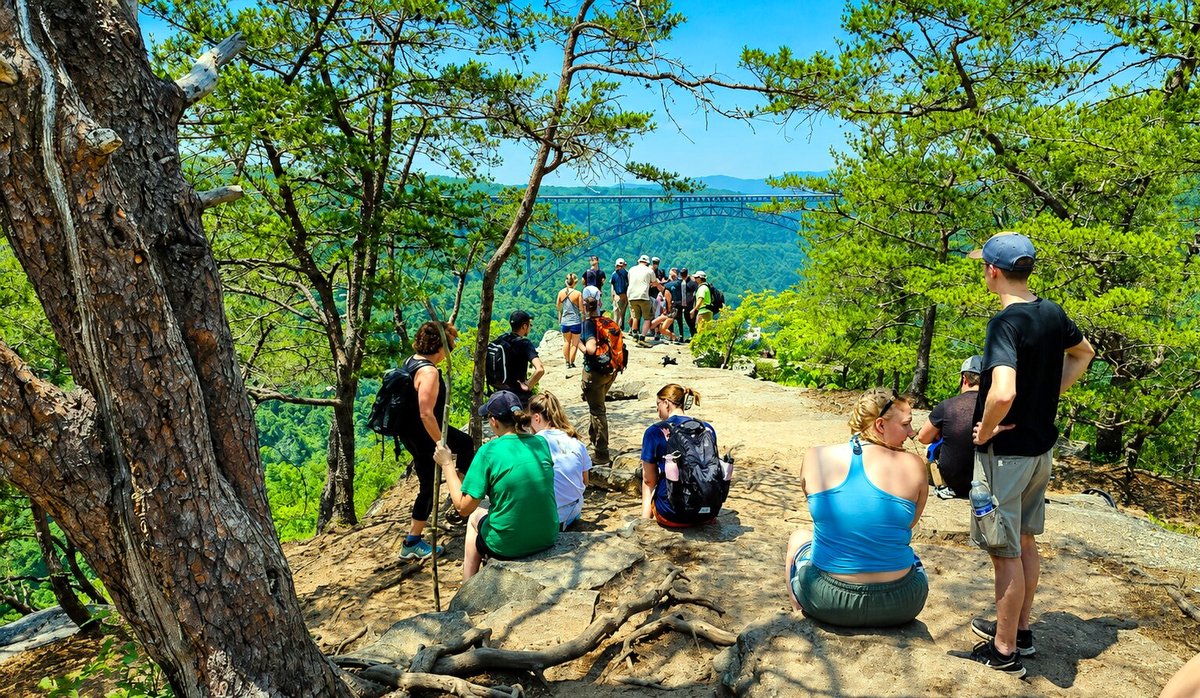
Also located in the New River Gorge National Park, the Long Point Trail leads to one of the state’s most-photographed overlooks. It culminates at a narrow sandstone promontory that extends into the gorge and offers panoramic views of the New River Gorge Bridge. Just more than three miles from Fayetteville, the route is almost the most popular in the gorge. The hike is moderately difficult but has become one of the most popular outdoor destinations in southern West Virginia. Approximate length: 1.6 miles one-way (about 3.2 miles round trip)
Bear Rocks Trails
The Bear Rocks area of the Dolly Sods Wilderness provides access to one of the most unusual landscapes in the eastern U.S. High elevations, wind-swept heath barrens, and sweeping mountain vistas create an environment more reminiscent of northern Canada than Appalachia. Short hikes from the Bear Rocks parking area offer exceptional scenery, while longer routes connect with the extensive trail network of the Dolly Sods backcountry. Approximate length: Short overlook trail combines with longer Dolly Sods routes ranging from 2–10+ miles.
North Fork Mountain Trail
Stretching along the crest of North Fork Mountain, the North Fork Mountain Trail offers some of the most extensive views in the state, along with fantastic rock formations. Its route follows a narrow ridge overlooking Smoke Hole Canyon to the east and the Allegheny Front to the west. The combination of rugged terrain, remote character, and nearly continuous vistas has earned the trail a reputation as one of the finest ridge hikes in the Appalachians. Approximate length: 24 miles end-to-end
Seneca Creek Trail
The Seneca Creek Trail traverses one of the most remote highland wilderness areas in Monongahela National Forest. Following a mountain stream through dense forests, it provides access to waterfalls, backcountry campsites, and the high elevations west of Spruce Knob, West Virginia’s highest point. The route is especially popular among backpackers seeking multi-day wilderness experiences. Approximate length: 11 miles one-way
High Falls Trail
The High Falls Trail leads to one of West Virginia’s most impressive waterfalls. Located on the Shavers Fork of the Cheat River within Monongahela National Forest, the route crosses Shavers Mountain, climbing through remote woodlands before reaching High Falls, a broad cascade that spans the fork. The trail is known for its scenic river views, abundant wildlife, and relative solitude. Approximate length: three miles one-way
Raven Rock Trail
Located in Coopers Rock State Forest, the Raven Rock Trail provides access to one of the state’s most dramatic overlooks, very near the popular Coopers Rock Overlook, for which the forest is named. The route descends through mature forest before reaching a rocky outcrop with expansive views of Cheat River Canyon. The overlook is particularly popular during autumn, when the surrounding mountains are transformed by fall foliage. Approximate length: 2.8–3 miles round trip
Glade Creek Trail
The Glade Creek Trail follows one of the most picturesque streams in the New River Gorge region. The route passes waterfalls and quiet pools through one of the most remote regions in the national park. Its natural beauty has made it a favorite among hikers and photographers. Lower in elevation than any other trail on this list, it enjoys a warmer local climate and may be accessible when others are snowbound. Approximate length: 5.6 miles one-way
Greenbrier River Trail
The Greenbrier River Trail is the longest of more than 60 trails in the state that follow former railroad grades. Extending for approximately 78 miles along the river through the Allegheny Mountains, it is also among the longest rail trails in the U.S. It passes through farms, forests, tunnels, and small communities while maintaining a relatively gentle grade suitable for hikers (and bikers) of all skill levels. Approximate length: 78 miles
Allegheny Trail
The Allegheny Trail is West Virginia’s longest designated hiking trail. Extending more than 300 miles through the mountains of eastern West Virginia, it connects state forests, wilderness areas, and sections of the Monongahela National Forest. The route offers opportunities for long-distance backpacking and is the state’s closest equivalent to the Appalachian Trail, which it joins at its southern terminus. Approximate length: 330 miles
Other Notable Trails
Numerous additional trails contribute to West Virginia’s reputation as a hiking destination. Popular examples include the Cranberry Glades Boardwalk, Red Creek Trail, Rohrbaugh Plains Trail, Huckleberry Trail, Lindy Point Trail, Balanced Rock Trail, Castle Rock Trail, and the trails surrounding Blackwater Falls State Park. Many of these routes showcase distinctive ecological communities, waterfalls, rock formations, or mountain vistas.
Hiking in West Virginia Today
The popularity of hiking in West Virginia has grown significantly in the twenty-first century, particularly following the establishment of New River Gorge National Park and Preserve in 2020. Increased interest in outdoor recreation, combined with the state’s extensive public lands and relatively undeveloped landscapes, has attracted visitors from throughout the eastern United States. Hiking remains one of the most important recreational uses of West Virginia’s forests, parks, and wilderness areas and continues to play a significant role in the state’s tourism economy.
Etiquette on the best hiking trails in West Virginia
Because many consider them the best hiking trails in West Virginia, these trails are seeing increased use, and etiquette along the route is increasingly important. As hiking has grown, public land managers and outdoor organizations have increasingly emphasized trail etiquette and responsible recreation. Hikers are encouraged to follow established trails, yield appropriately to other users, respect wildlife, and avoid disturbing natural or historical features.
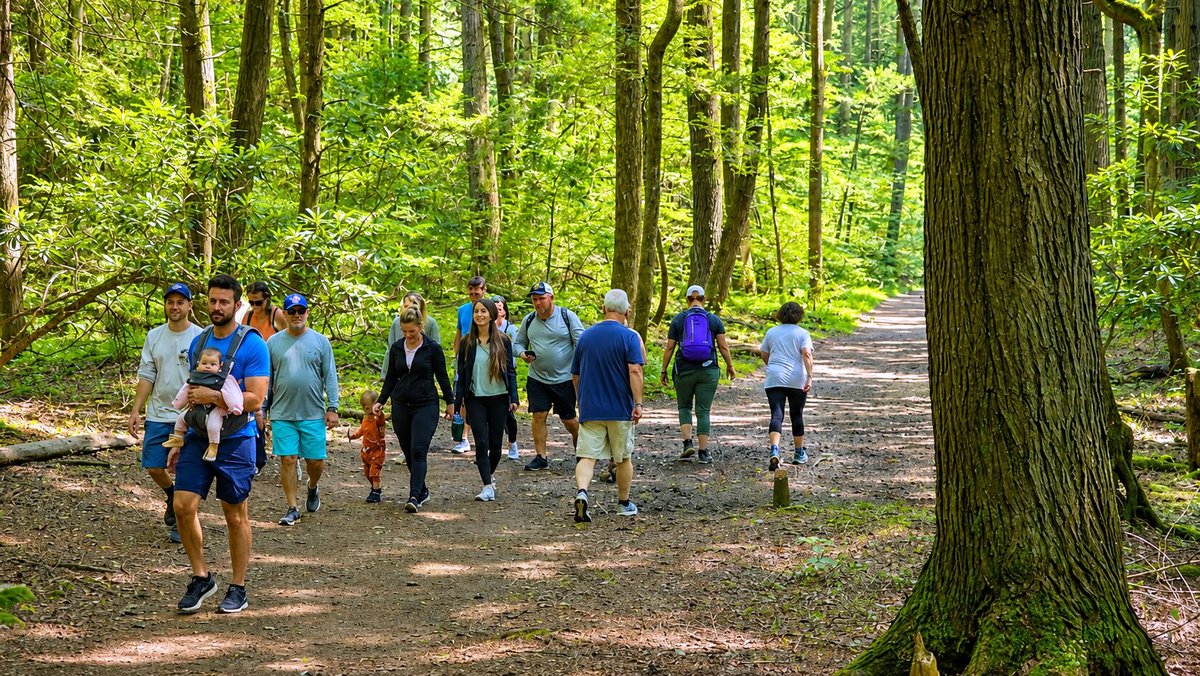
The principles of Leave No Trace, which promote minimizing environmental impacts and preserving outdoor spaces for future visitors, have become widely adopted throughout the state’s parks, forests, and wilderness areas. Proper trail etiquette also includes packing out litter, keeping pets under control, respecting private property boundaries, and exercising caution during periods of high water, severe weather, or seasonal trail closures.
Increased visitation to many of West Virginia’s most popular hiking destinations has presented both opportunities and challenges. Areas such as the New River Gorge, Dolly Sods Wilderness, and sections of Monongahela National Forest have experienced substantial growth in recreational use during the twenty-first century.
While increased tourism has contributed to local economies and strengthened support for conservation, heavier trail traffic has also raised concerns about erosion, overcrowding, parking constraints, and impacts on sensitive ecosystems. In response, land managers, volunteer organizations, and conservation groups have expanded trail maintenance efforts and educational programs to protect the natural resources that attract visitors to West Virginia’s hiking trails.
See Also
- Hiking in West Virginia
- New River Gorge National Park and Preserve
- Monongahela National Forest
- Dolly Sods Wilderness
- Spruce Knob
- Allegheny Trail
- Greenbrier River Trail
- Coopers Rock State Forest