
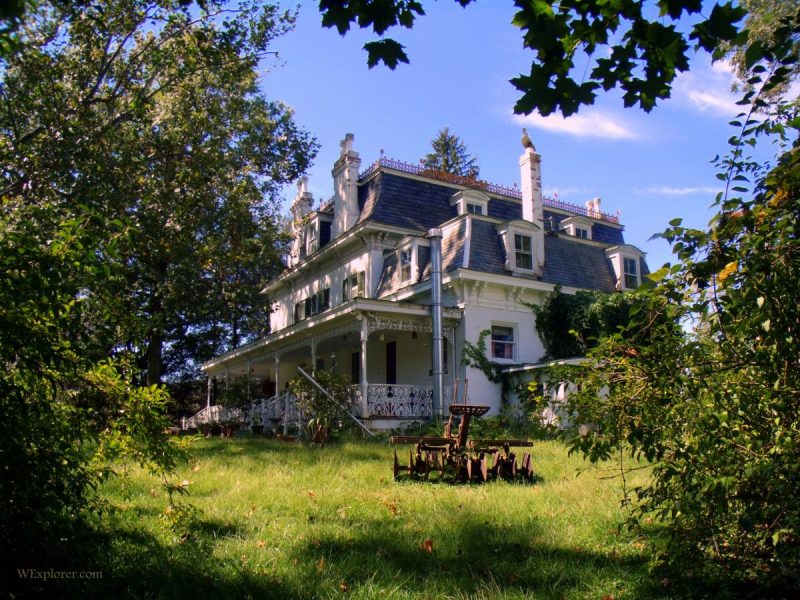
Ohio Valley real estate includes farms, hunting properties, recreational properties, and homes for sale in historic neighborhoods in and near Parkersburg, Huntington, Point Pleasant, Ravenswood, Vienna, New Martinsville, Saint Marys, Williamstown, and Sistersville. The valley is renowned for its idyllic weather, long growing season, and fertile farmland. The northern valley extends into the northern panhandle.
Ohio Valley Real Estate Sponsors
David Sibray, Foxfire Realty
Phone: (304) 575-7390
Historian and publisher David Sibray has made a life’s work of promoting West Virginia and its landscape, as a marketer of tourism and of farms, forests, and fine homes. An expert in historic preservation, he serves on the board of the state’s Preservation Alliance and brings a wealth of knowledge to the sale of heritage properties and Ohio Valley real estate.
More about Ohio Valley Real Estate
Ohio Valley real estate encompasses residential, commercial, industrial, agricultural, and recreational properties along West Virginia’s western border with Ohio. Extending from Hancock County in the state’s Northern Panhandle southward through Brooke, Ohio, Marshall, Wetzel, Tyler, Pleasants, Wood, Jackson, Mason, and Cabell counties, the region is defined by the Ohio River and the communities that developed along its banks.

Major population centers include Wheeling, Weirton, Moundsville, Parkersburg, Point Pleasant, Huntington, and numerous smaller river towns that have played important roles in the state’s industrial and commercial history.
The Ohio Valley contains some of West Virginia’s most diverse real estate markets. Historic urban neighborhoods, suburban developments, industrial properties, riverfront commercial districts, agricultural land, and rural residential communities contribute to a broad range of property types. The region’s proximity to Ohio, Pennsylvania, and Kentucky has long influenced development patterns and property values.
Historical Development
Real estate development in the Ohio Valley was closely tied to transportation, manufacturing, and commerce. The Ohio River was one of the nation’s principal transportation corridors in the nineteenth century, encouraging settlement and economic growth throughout western Virginia, later West Virginia.
Cities such as Wheeling and Parkersburg emerged as major transportation and industrial centers, while smaller communities developed around river commerce, manufacturing facilities, railroads, and agriculture. The arrival of rail transportation in the nineteenth century accelerated urban growth and spurred residential and commercial development along the river corridor.
Industrial expansion in the late nineteenth and twentieth centuries brought significant population growth to many Ohio Valley communities. Steel production, glass manufacturing, chemicals, energy production, and related industries generated demand for housing, commercial space, and industrial property throughout the region.
Residential Real Estate
Residential real estate in the Ohio Valley ranges from historic urban neighborhoods to modern suburban developments and rural properties. Cities such as Wheeling, Parkersburg, and Huntington feature architecturally significant residential districts with Victorian, Colonial Revival, Craftsman, and early twentieth-century homes that reflect the prosperity of the industrial era.
Suburban growth expanded significantly after World War II, particularly in communities near major employment centers. Residential development has continued in areas with convenient access to regional highways, schools, healthcare facilities, and commercial services.
Rural properties remain common throughout the hills and valleys overlooking the Ohio River, offering homeownership on larger tracts of land while maintaining proximity to urban amenities.
Commercial Real Estate
Commercial real estate is concentrated in the region’s principal cities and along transportation corridors. Downtown business districts, shopping centers, office parks, hospitality properties, and mixed-use developments serve local residents and regional visitors.
Revitalization efforts in communities such as Wheeling, Huntington, and Parkersburg have spurred investment in historic commercial buildings and riverfront districts. Adaptive reuse projects have transformed former industrial and warehouse properties into residential, office, retail, and entertainment spaces, fueling renewed interest in urban real estate.
Healthcare, education, professional services, and retail trade remain key drivers of commercial property demand throughout the Ohio Valley.
Industrial Real Estate
Industrial real estate has long been a defining feature of the Ohio Valley market. The region’s access to river transportation, railroads, interstate highways, and energy resources has supported manufacturing and distribution for more than a century.
Industrial facilities associated with steel production, chemicals, polymers, petrochemicals, energy generation, and logistics continue to occupy substantial portions of the river corridor. More recently, development related to the Marcellus and Utica shale formations has influenced industrial investment in parts of the Northern Panhandle and Mid-Ohio Valley.
Business parks, distribution centers, and manufacturing facilities remain significant components of the regional real estate inventory.
Agricultural and Recreational Properties
Agricultural land remains a significant part of the Ohio Valley real estate market, especially in areas outside major urban centers. Farms support livestock production, crop cultivation, and specialty agricultural enterprises. Many agricultural properties have stayed in family ownership for generations, while others have been adapted for residential or recreational use.
The region also includes recreational properties for hunting, fishing, boating, and other outdoor activities. Riverfront land, wooded acreage, and properties near parks and wildlife management areas appeal to buyers seeking both residential and recreational opportunities.
Market Characteristics
The Ohio Valley generally offers some of the most affordable housing markets in the eastern United States. Property values vary widely by location, employment opportunities, housing condition, and proximity to metropolitan areas. Communities near growing employment centers often see stronger housing demand, while smaller towns may offer exceptionally affordable residential and commercial properties.
The region’s housing stock includes many historic homes, many of which are priced below those in larger metropolitan markets. This affordability has attracted retirees, first-time homebuyers, and individuals relocating from neighboring states.

Economic diversification, downtown redevelopment, and infrastructure improvements have fueled renewed interest in select urban and suburban markets, particularly in communities with strong healthcare, education, and technology sectors.
Economic Significance
Real estate plays a vital role in the Ohio Valley economy, supporting construction, finance, manufacturing, transportation, healthcare, retail trade, and tourism. Property taxes from residential, commercial, and industrial development provide critical revenue for local governments and public services.
As one of West Virginia’s most historically significant and economically diverse regions, the Ohio Valley maintains an active real estate market shaped by its industrial heritage, transportation advantages, and strategic location within the broader Ohio River corridor. The combination of affordability, historic character, and economic opportunity ensures that Ohio Valley real estate remains an important component of the state’s property market.
Since 2020, the remote work revolution has dramatically changed the Ohio Valley real estate market, according to David Sibray, a real estate agent with Foxfire Realty and publisher of West Virginia Explorer. “Rural benefits and proximity to major cities have changed the market in Ohio Valley real estate in a manner real estate brokers haven’t witnessed in more than a century,” Sibray said.
The Ohio Valley Real Estate Market
All or parts of the following counties may be considered part of the Ohio Valley Real Estate region in western West Virginia: Cabell County, Mason County, Jackson County, Wood County, Pleasants County, and Wetzel County.