The Carriage Trail is a historic walking and hiking path in Charleston, West Virginia, that climbs the wooded hillside overlooking the Kanawha River from the city’s downtown. The trail is one of Charleston’s most recognizable urban recreation areas, offering a blend of history, forest scenery, river overlooks, and convenient access from downtown neighborhoods.

Originally built as a carriage road in the late nineteenth century, the route provided access to hilltop estates and scenic viewpoints above the city before the widespread use of automobiles. Although horse-drawn vehicles disappeared from Charleston’s streets long ago, the former roadway survives as a public trail that preserves a rare glimpse of the city’s Victorian-era landscape.
History
The Carriage Trail follows a route established during Charleston’s rapid growth in the late 1800s, when prosperous residents built homes along the hillsides east of downtown. At the time, carefully graded carriage roads allowed horse-drawn vehicles to reach properties overlooking the Kanawha Valley while also providing fashionable scenic drives.
Over time, many of the surrounding estates disappeared or were subdivided as Charleston expanded during the twentieth century. Rather than abandoning the historic roadway, local preservation efforts helped retain it as a pedestrian trail, allowing generations of residents to continue enjoying the wooded corridor and panoramic views.
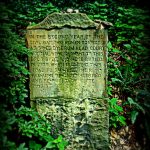
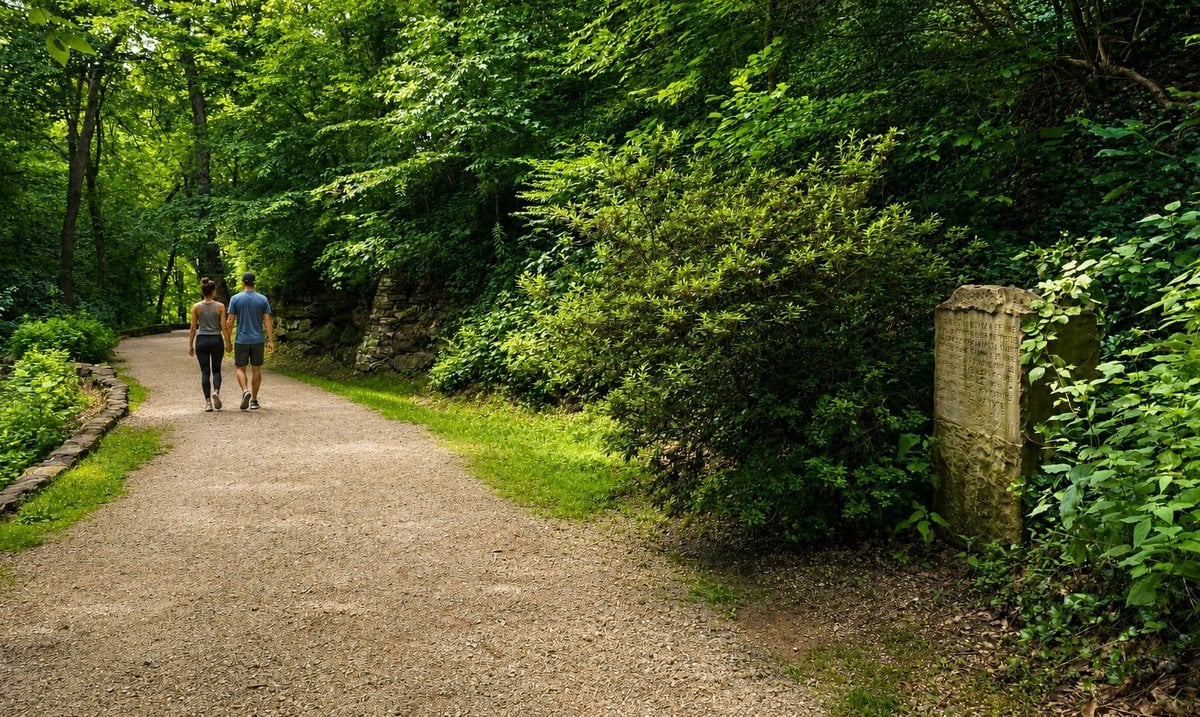
The trail also passes several sites connected with Charleston’s early history, including a monument commemorating two unidentified women whose remains were reportedly uncovered during construction of the original carriage road. The identities of the women remain uncertain, though local historians have long associated the discovery with Civil War-era traditions involving suspected Union spies. The monument has become one of the trail’s most discussed historical features.
Trail Description
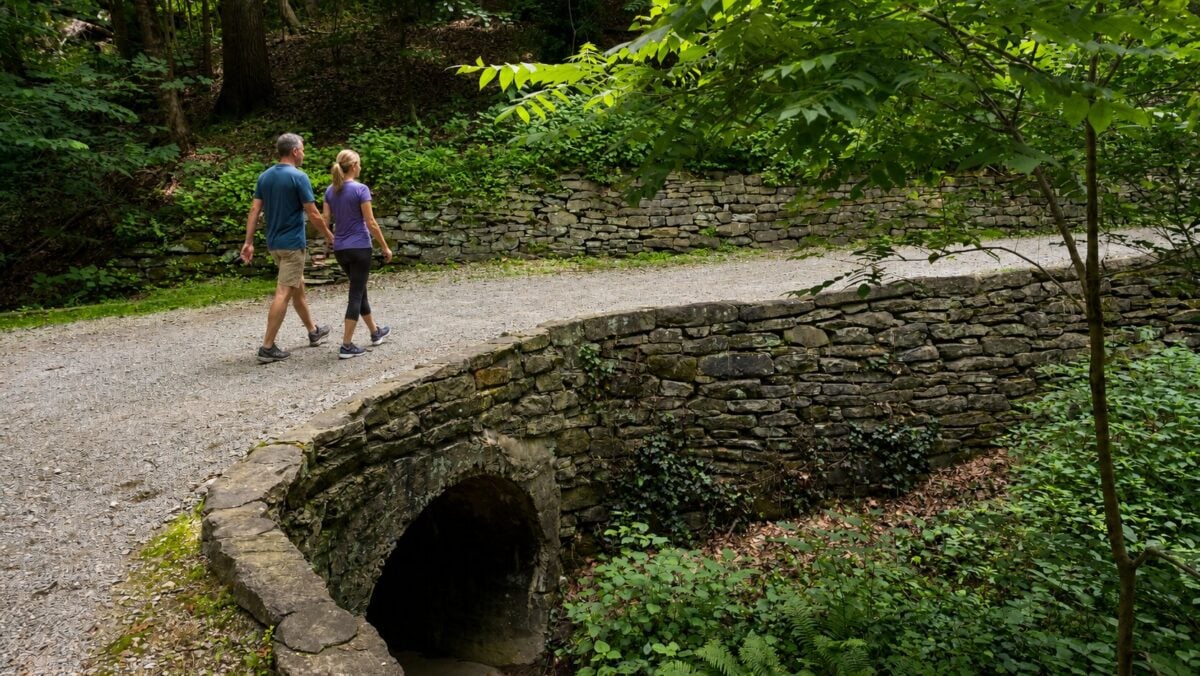
The Carriage Trail follows a broad, gently graded gravel surface that reflects its origins as a nineteenth-century carriage road. Unlike many hiking trails that climb steep slopes, the route ascends gradually through mature hardwood forest, making it accessible to walkers of varying abilities.
Towering oaks, tulip poplars, maples, and other native trees provide shade throughout much of the year. In spring, wildflowers bloom along the trail, while autumn brings colorful displays of Appalachian hardwood foliage. Wildlife commonly observed includes squirrels, songbirds, white-tailed deer, and occasional wild turkeys.
Several overlooks offer views across downtown Charleston, the Kanawha River, and the surrounding mountains, particularly after leaves have fallen.
Recreation
Today, the Carriage Trail is used year-round for walking, hiking, jogging, nature photography, birdwatching, and quiet outdoor recreation. Because of its gentle grade and proximity to downtown Charleston, it is popular with both residents and visitors seeking a short hike without leaving the city.
The trail also serves as an important connection between Charleston’s East End neighborhoods and higher elevations overlooking the capital city. Its combination of historical significance and natural setting makes it one of the area’s most distinctive urban green spaces.
Visiting
The Carriage Trail is generally open daily during daylight hours as part of Charleston’s public park system. Visitors should wear appropriate footwear, carry drinking water during warm weather, and exercise caution after periods of heavy rain, when portions of the gravel surface may become slick.
Parking is available near the lower trailhead in Charleston’s South Hills neighborhood, allowing hikers to complete a short out-and-back walk or combine the route with connecting trails in the surrounding parkland.
Read more: Walking the Carriage Trail
Legacy
The Carriage Trail illustrates how Charleston’s transportation history has been successfully adapted for modern recreation. What began as a scenic carriage road for horse-drawn travel has become one of the city’s best-loved hiking destinations, preserving both its historic character and its wooded landscape for future generations.
Today, the trail remains a favorite destination for visitors seeking a blend of local history, forest scenery, and views of West Virginia’s capital city within minutes of downtown.
For more information on visiting Charleston and the Carriage Trail, visit the Charleston Convention and Visitors Bureau.