
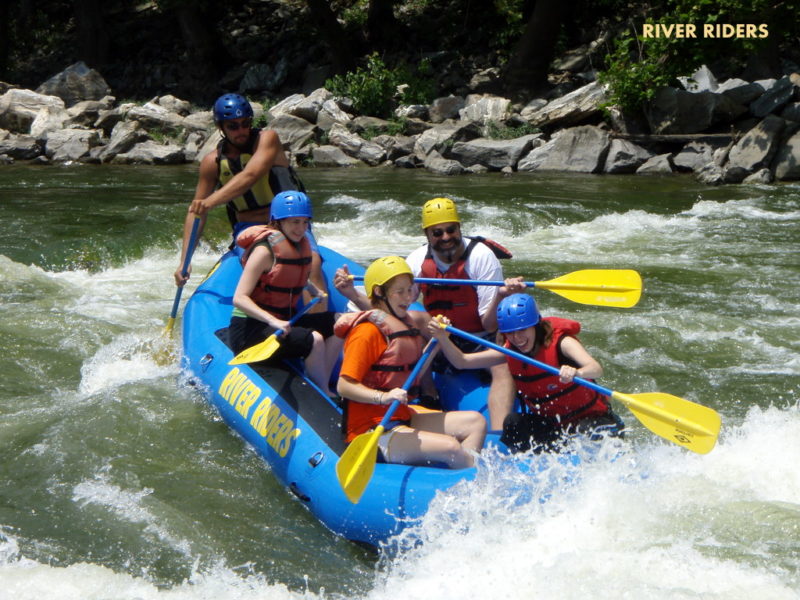
The Potomac River offers some of West Virginia’s most accessible whitewater rafting opportunities. Flowing along the state’s Eastern Panhandle and through the historic landscape surrounding Harpers Ferry, the river combines Class I-III rapids, mountain scenery, and nationally significant historic sites within easy reach of Washington, Baltimore, and Northern Virginia.

Unlike the larger whitewater rivers of southern West Virginia, rafting on the Potomac is generally suited to families, beginners, and recreational paddlers. Commercial trips commonly combine sections of both the Potomac and Shenandoah rivers near Harpers Ferry, where the two waterways meet beneath the Blue Ridge Mountains. Additional paddling opportunities occur along the South Branch Potomac River, including the scenic Trough region of Hardy and Hampshire counties.
Today, the Potomac remains one of the Mid-Atlantic’s most popular rafting destinations, attracting visitors seeking a combination of whitewater adventure, natural scenery, and outdoor recreation in one of West Virginia’s most historic regions.
Why rafters travel to the Potomac River
Many visitors choose the Potomac River for an introduction to whitewater rafting without the intensity of West Virginia’s larger rivers. Rapids near Harpers Ferry generally range from Class I to Class III, creating an experience that is exciting enough for first-time rafters while remaining suitable for families and recreational paddlers. Seasonal water levels can increase the challenge, particularly during spring runoff.
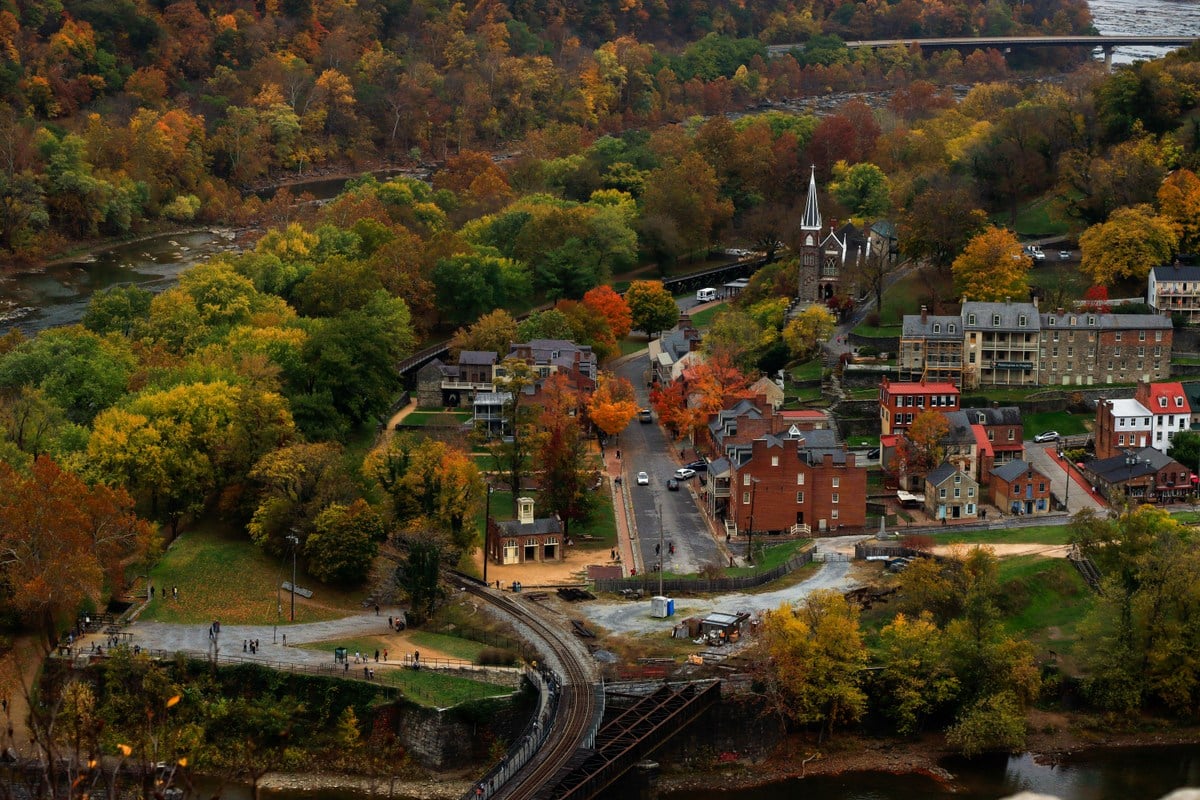
The river’s setting is another major attraction. Rafting trips pass through the gap where the Potomac and Shenandoah rivers cut through the Blue Ridge Mountains at Harpers Ferry. Along the way, paddlers encounter forested slopes, rocky riverbanks, and views of one of the most historic landscapes in the United States. Few rafting destinations combine outdoor adventure with such a concentration of cultural and historical landmarks.
The Potomac is also one of the most convenient rafting destinations in the eastern United States. Located within a short drive of Washington, D.C., Baltimore, and Northern Virginia, the river attracts day-trippers as well as vacationers exploring West Virginia’s Eastern Panhandle.
Potomac River Whitewater near Harpers Ferry
Most commercial rafting trips take place near Harpers Ferry, where the Potomac River and Shenandoah River converge before entering the water gap through the Blue Ridge Mountains.
Several sections of river provide varying levels of difficulty. During normal flows, rapids generally range from Class I to Class III, making the area especially popular among families, youth groups, and first-time rafters. Water levels can significantly influence the character of the river, with spring rains often creating faster currents and more challenging conditions.
Because of the area’s accessibility and scenic setting, Harpers Ferry has become one of the most popular rafting destinations in the Mid-Atlantic region.
The Potomac and Shenandoah Confluence
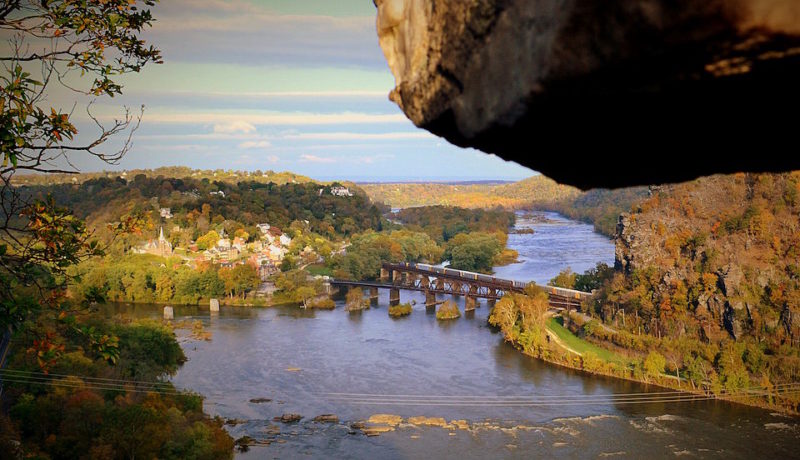
One of the most distinctive features of rafting near Harpers Ferry is the confluence of the Potomac and Shenandoah rivers. Here, two of the region’s most significant waterways meet beneath steep mountain ridges before continuing eastward toward the Chesapeake Bay.
The meeting of the rivers has attracted travelers for centuries. Native American peoples used the area long before European settlement, and the location later became an important transportation corridor and industrial center.
Today, rafters and paddlers often enjoy views of Harpers Ferry’s historic district, the surrounding mountains, and portions of the Appalachian Trail corridor.
South Branch Potomac River and The Trough
The South Branch Potomac River provides a very different rafting experience. Flowing through the mountains of eastern West Virginia, the river is known for its clear water, broad valleys, and remote scenery.
One of the most popular destinations is The Trough, a narrow mountain valley located between Romney and Petersburg. Commercial float trips through this section offer mild rapids, abundant wildlife, and opportunities to observe bald eagles, river otters, and other native species.
While the South Branch lacks the more challenging rapids found near Harpers Ferry, it is widely regarded as one of the state’s most scenic paddling destinations.

Whitewater Difficulty And River Conditions
The Potomac River is generally considered suitable for beginner and intermediate rafters.
Most commercial rafting trips feature Class I, Class II, and Class III rapids, though conditions vary with rainfall and seasonal water levels. Spring often brings the highest flows, while summer typically provides more moderate conditions.
Outfitters closely monitor river levels and weather conditions before operating trips. Participants should always follow guide instructions and wear approved safety equipment.
Best Time To Go
Rafting trips on the Potomac River typically operate from spring through early autumn.
Spring brings cooler temperatures and higher water levels, often creating the most exciting whitewater conditions. Summer offers warmer weather and lower flows, making it especially popular for families, youth groups, and first-time rafters.
Autumn combines comfortable temperatures with colorful foliage, creating one of the most scenic times to experience the river.
Wildlife and Scenery
The Potomac watershed supports a wide variety of wildlife and habitats. Bald eagles are commonly observed along portions of both the Potomac and South Branch Potomac rivers, while great blue herons, kingfishers, osprey, and numerous migratory songbirds also inhabit the region.
Forested ridges, limestone cliffs, river islands, and mountain valleys provide constantly changing scenery throughout the rafting season.
In autumn, the surrounding hardwood forests display vibrant shades of red, orange, and gold, attracting paddlers and photographers from across the region.
Planning a Potomac River Rafting Trip
Visitors should plan their trip according to the type of experience they prefer. Families and first-time rafters often choose guided rafting trips near Harpers Ferry, while paddlers seeking a quieter scenic float may prefer the South Branch Potomac and The Trough.
Because river conditions can change rapidly, visitors should check weather forecasts and river levels before arriving.
Additional Resources
American Whitewater Potomac River Information
National Weather Service River Forecasts
West Virginia Division of Natural Resources
Commercial Outfitters
Several commercial outfitters offer guided rafting, tubing, kayaking, and canoeing trips on the Potomac River and its tributaries. Guided trips typically include professional river guides, safety equipment, transportation, and instruction. Outfitters may offer half-day, full-day, and multi-activity adventure packages.

Visitors should contact outfitters directly for current schedules, age requirements, and river conditions.
Nearby Attractions
Many visitors combine rafting with exploration of nearby destinations.
Popular attractions include Harpers Ferry National Historical Park, the Appalachian Trail, C&O Canal National Historical Park, Sleepy Creek Wildlife Management Area, and the scenic mountain communities of the Eastern Panhandle.
Additional outdoor recreation opportunities include hiking, mountain biking, fishing, camping, rock climbing, and wildlife viewing.
Potomac River Rafting at a glance
Primary Locations: Harpers Ferry, South Branch Potomac River, The Trough
Difficulty: Class I-III
Season: Spring through autumn
Suitable For: Families, beginners, recreational paddlers
Nearest Major Cities: Washington, D.C.; Baltimore; Winchester
Known For: Family-friendly whitewater, historic scenery, mountain views, wildlife watching
Popular Sections: Harpers Ferry whitewater runs, Potomac-Shenandoah confluence, South Branch Potomac, The Trough
Frequently Asked Questions
Is Potomac River rafting suitable for beginners?
Yes. Most commercial rafting trips on the Potomac feature Class I-III rapids and are designed for beginners, families, and first-time rafters.
What is the best rafting section of the Potomac River?
The most popular rafting destination is near Harpers Ferry, where the Potomac and Shenandoah rivers meet. The South Branch Potomac and The Trough are also popular for scenic float trips.
When is rafting season on the Potomac River?
Most outfitters operate from spring through autumn, with spring offering higher water levels and summer providing warmer conditions.
How does the Potomac compare with the New River and Gauley River?
The Potomac generally offers a milder experience. While the New River and Gauley River are known for larger and more challenging rapids, the Potomac is better suited to families, beginners, and recreational paddlers.
The Potomac River remains one of West Virginia’s most accessible and versatile rafting destinations. Combining mild whitewater, mountain scenery, abundant wildlife, and nationally significant historic sites, it offers an outdoor experience unlike any other river in the Appalachian region.
Map of Potomac River Rafting Area
Expeditions on the Potomac River generally launch off Bakerstown Road upstream of Harpers Ferry and end above the US-340 bridge off Sandy Hook Road in Maryland. Outfitters then transport rafters back to base camps.
Read More
- Whitewater Rafting in West Virginia
- Shenandoah River Whitewater Rafting
- New River Whitewater Rafting
- Gauley River Whitewater Rafting
- Harpers Ferry
- Harpers Ferry National Historical Park
Help build our guide to Potomac River whitewater rafting
We’re continually looking for writers to help build our guide to whitewater rafting in West Virginia. Interested in contributing? Please let a member of our editorial team know.